
More than a few takeaways

While work continues on my actual writing projects, I’ve also been trying to reduce the number of scripts in my “Scripts to Read” folder.

It’s a decent-sized mix of recent and not-so-recent films, along with material written by professionals, colleagues, and “Hey, I saw you posting about this on social media. Sounds cool. Could I read it?”

It’s amazing how fast you can go through a script when you don’t have to give notes. Even more so when it’s exceptionally well-written, which a lot of these are.

One pair in particular, both written by the same pro.

Each script was unique unto itself, primarily in its story/concept. But you could tell that they were written by the same writer. A very distinctive style for how the stories played out, how it looked on the page, and even moreso in terms of voice.

One detail in particular that really stood out was the lightning pace in which these stories are told. Scenes are brief, to the point, and really move things forward. There’s no lingering, no unnecessary dialogue. The writer really adheres to the “get in late, get to the point, move on” method.

These were scripts that once you started, you didn’t want to stop. Honestly. The writing really was that good.

It’s also worth mentioning that these scripts don’t necessarily break any screenwriting rules, but they sure do bend them. Nothing major or drastic, but the writing is so strong that you’re willing to overlook this unusual approach.

Reading these scripts definitely makes you appreciate (and enjoy) how well-written they are, and also starts you thinking “My scripts aren’t at this level, so what can I do to get them closer to it?” Not that I’d ever try to duplicate this writer’s style – that would be futile. It’s more about letting my own voice and style really come through on all those fronts.

I’ve always been guilty of overwriting scenes, and seeing this very streamlined presentation is a good reminder that I should try for that as well.

It’s probably a good thing that I’m reading all of these scripts now because it’s still relatively early in the rewrite/overhaul phase for my scripts. I don’t think it’ll be too much of an issue to start applying what I’m picking up into them.

My scripts were good, but now it feels like there’s more potential for them to be much, much better. Here’s hoping.
From the archives: Writing in your own voice

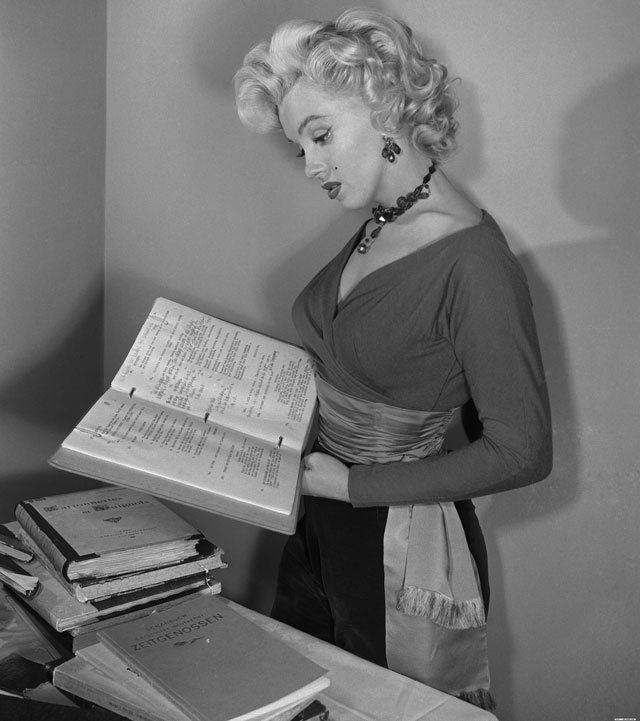
“Hmm. Billy’s new script. Something about men dressing up as women to hide from gangsters? Hope it’s funny.”

I’ve seen a good number of articles and online comments recently about how a script should convey the writer’s “voice”. That prompted this blast from the past from June 8, 2018.

Enjoy.

“When I’ve done script notes for writing colleagues, no matter what the genre is, I can usually tell who wrote it – because of the way it reads. Each writer has their own particular style, so each of their scripts has its own corresponding “sound”. Or I’ll get notes back on my material which often includes a comment along the lines of “this sounds like something you’d write”.

This isn’t just about dialogue. It’s about a writer’s overall style, or how they tell the story of their script. You don’t just want the reader to read your story; you want them to experience it. Which can be accomplished by adding that extra layer.

Everybody develops their own individual style, and it takes time to find it. The more you write, the more you’ll be able to hone your writing to reflect your own individuality.

Just a few things to think about:

-How does your script read? Is the writing crisp and efficient, or are you wasting valuable page real estate with too many lines of  your loquacious verbosity? Taking it one step further, do you use the same words over and over, or do you relish any opportunity to give your thesaurus a solid workout?

-How is your story set up and how does it play out? Is it simple and straightforward, or complex and full of deliciously tantalizing twists and turns? Are you working that creativeness to show us things we haven’t seen before, or is just page after page of the same ol’, same ol’?

-Is it a story somebody besides you would want to see? Just because you find the subject matter interesting doesn’t mean it has universal appeal. However, there is the counter-argument to that in which you could attempt to have your story include elements that would satisfy fans of the genre while also appealing to newcomers.

-Can’t ignore the population within the pages. Are your characters well-developed and complex, or do they come up lacking? Do we care about them, or what happens to them? Can we relate to them?

-What are your characters saying, or not saying (subtext!)? How are they saying it? Do they sound interesting or dull as dishwater? Very important – do they sound like actual people, or like “characters in a movie”?

Remember – the script is a reflection of you. A solid piece of writing shows you know what you’re doing. Offering up something sloppy is simply just sabotaging yourself.

Who hasn’t heard a variation on the line about a script being a cheap knockoff of a more established writer? While I can understand admiring a pro writer’s style, why would you attempt to copy it? It probably took them a long time to find their own voice, and by trying to write like they do, you’re denying yourself the opportunity to do the same thing for yourself.

Or to put it another way: they didn’t take any shortcuts to become the writer they are today, so why should you?”

Writing in your own voice

Marilyn script
“Hmm. Billy’s new script. Men dressing up as women to hide from gangsters? Sounds funny.”

When I’ve done script notes for writing colleagues, no matter what the genre is, I can usually tell who wrote it – because of the way it reads. Each writer has their own particular style, so each of their scripts has its own corresponding “sound”. Or I’ll get notes back on my material which often includes a comment along the lines of “this sounds like something you’d write”.

This isn’t just about dialogue. It’s about a writer’s overall style, or how they tell the story of their script. You don’t just want the reader to read your story; you want them to experience it. Which can be accomplished by adding that extra layer.

Everybody develops their own individual style, and it takes time to find it. The more you write, the more you’ll be able to hone your writing to reflect your own individuality.

Just a few things to think about:

-How does your script read? Is the writing crisp and efficient, or are you wasting valuable page real estate with too many lines of  your loquacious verbosity? Taking it one step further, do you use the same words over and over, or do you relish any opportunity to give your thesaurus a solid workout?

-How is your story set up and how does it play out? Is it simple and straightforward, or complex and full of deliciously tantalizing twists and turns? Are you working that creativeness to show us things we haven’t seen before, or is just page after page of the same ol’, same ol’?

-Is it a story somebody besides you would want to see? Just because you find the subject matter interesting doesn’t mean it has universal appeal. However, there is the counter-argument to that in which you could attempt to have your story include elements that would satisfy fans of the genre while also appealing to newcomers.

-Can’t ignore the population within the pages. Are your characters well-developed and complex, or do they come up lacking? Do we care about them, or what happens to them? Can we relate to them?

-What are your characters saying, or not saying (subtext!)? How are they saying it? Do they sound interesting or dull as dishwater? Very important – do they sound like actual people, or like “characters in a movie”?

Remember – the script is a reflection of you. A solid piece of writing shows you know what you’re doing. Offering up something sloppy is simply just sabotaging yourself.

Who hasn’t heard a variation on the line about a script being a cheap knockoff of a more established writer? While I can understand admiring a pro writer’s style, why would you attempt to copy it? It probably took them a long time to find their own voice, and by trying to write like they do, you’re denying yourself the opportunity to do the same thing for yourself.

Or to put it another way: they didn’t take any shortcuts to become the writer they are today, so why should you?

The “sound” of your writing

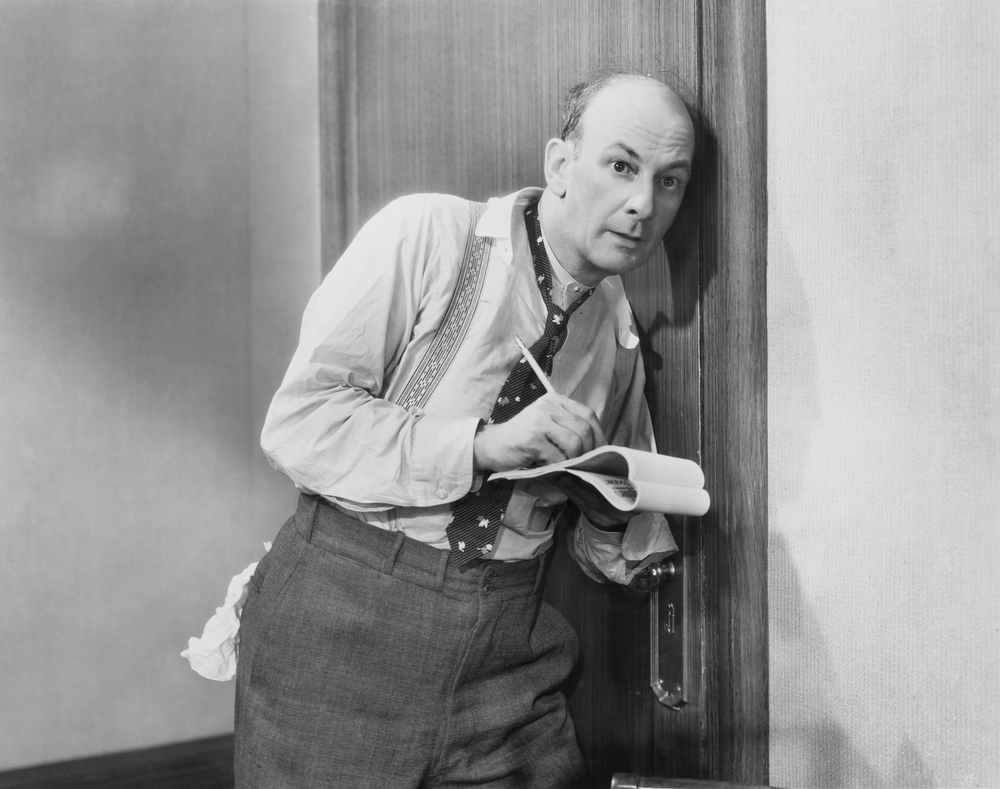
eavesdropping
No! Find your own style of writing. Don’t copy someone else’s.

When somebody reads your script,is there something about the writing that they can tell you’re the one who wrote it? Do you have a certain style or “voice” regarding how your material reads?

Each writer develops their own particular way of not only how they write, but how that material comes across on the page.

When you’re just starting out, maybe you play it safe and keep things simple and straightforward. Or you might try from the get-go to emulate a script or writer you really, really like, because if it worked for them, then it stands to reason that it will undoubtedly work for you in the exact same way. This is occasionally referred to as the Tarantino Syndrome.

There’s nothing wrong with appreciating a pro’s style, but for crying out loud, DO NOT try to duplicate it. That’s how they do it, which is not the same as how you do it. It also smacks of laziness. You want to make a name for yourself, right? So how are you going to do that by writing like somebody else?

Find a way that works for you and stick with it. Hone your writing skills with each draft until every script you offer up is undeniably identifiable as yours.

The more you produce, the more comfortable you’ll get with how you write, along with becoming more confident in your abilities. You’ve put in the work learning the rules, so now you feel ready to see how far you can bend them (but not too much! They can be very fragile at times.).

Soon you’ll have no hesitation to start putting your own spin on things; little touches here and there. Although the usual challenges and obstacles will still be there, you might discover that your overall process of writing has gotten just a little bit easier.