I knew I’d forget to remember

Hmm. I don't remember buying string, either
Hmm. I don’t remember buying string, either

Yesterday I came up with a great subject for today’s post. It was going to be fantastic. Poignant. Relatable. Very informative. You would have loved it.

I figured there was no way I could not remember something this incredible.

And of course, just a few hours later, I totally forgot what it was. I can rack my brains all I want, but it ain’t gonna work. Maybe it’ll pop up again someday, but for now, it’s gone forever.

Jump to last evening. I did a little more work on the first quarter of Act Two of the monster spec, so I’m still up to that page 45 twist.

With my next objective now getting to the all-important Point of No Return (where your protagonist becomes fully committed to achieving their goal), the ideas for scenes between those two plot points starting popping into my head.

And I had no intention of letting them get away.

Lesson learned from earlier in the day, I immediately wrote some down, with more likely to be added later.

I probably won’t even use that many of them, but it’s still better to be able to pick and choose from a wide variety of readily-available options than to curse my lack of foresightedness and have nothing to work with.

Since we’re all creative types around here, we know full well that inspiration can hit anytime and anyplace, which is great. But are we prepared to capture it when it does?

Bet you’ll think “Oh, I’ll definitely remember.”

Please don’t, especially if it’s an idea worth keeping.

Pen and notepad in your briefcase or backpack, an app for dictating on your phone, an extra line on that document on your computer, whatever method works for you.

Taking those extra seconds to save an idea now can potentially prevent you from seemingly endless frustration in the future.

Let’s keep things simple, shall we?

This series was anything but easy to follow
Talk about confusing. This series was anything but easy to follow

A nice writing sprint for the monster spec outline resulted in getting to the page 45 plot point, which was great. But what it made it especially satisfying was realizing how to get there in the equivalent of a short, straight line.

No overly complicated story details. No sudden heading off in a totally different direction. Just THIS leading right into THAT, doing exactly what was intended.

One of the most important parts of presenting a story is that everything you need to know has been properly set up, and that it all flows smoothly from one scene to the next.

While you’re still in the plotting-everything-out stage, ask yourself “Is this easy to follow?” A lot of writers will defend their material as such, but that doesn’t necessarily mean it is.

This thing is practically a part of you. You’ve labored over it for what feels like forever, and you know the story inside and out.

We don’t, which means there’s a good chance someone reading it for the first time might not pick up on everything, which isn’t our fault.

Maybe you’ve thrown too much information at us, or just have too much going on that it’s hard to keep track of everything.

It happens, but it’s not the crisis you think it is. Don’t see it as laboring your way through yet another rewrite; it’s actually another chance to make your script better.

Think streamlined.

Strive to avoid unwanted bloat and confusion by constantly checking and re-checking that your story elements make sense, fit where they should and play an important part in telling the story.

A one-man demolition & construction crew

Tear it down, then rebuild
Stuck in a vicious cycle of build, knock down, rebuild (repeat as necessary)

Due to circumstances beyond my control, actual work on revamping of the monster spec outline was practically nonexistent this week, but I’m hoping to get back into the swing of things soon.

In the meantime, there’s been a lot of thought about the next steps in terms of developing the story.

Since so many of the details have changed since the previous version, a lot of material was cut. I really hated to see it go, but it had to be done. As always, some of it may return in a modified form.

This, of course, left significant gaps in the story to be filled. Challenging, thrilling and maybe a little intimidating, all at once.

Working in my favor is knowing what the major plot points are. They’re in place, so the focus now is how to connect them in the most effective ways I can come up with.

Just putting a few empty lines between the plot points (each one represented by a dash) actually helps with getting from one to the next. Here’s Point A, so what needs to happen to get to Point B?

Simple, yet productive. Sometimes.

This also enables me to see how the various plotlines play out (protagonist, antagonist, various subplots), how they all connect and when would be the best time to show the latest developments, all while constantly striving to keep it all fun, interesting and exciting.

As always, fingers firmly crossed for progress in the coming days.

Introduce your character with character

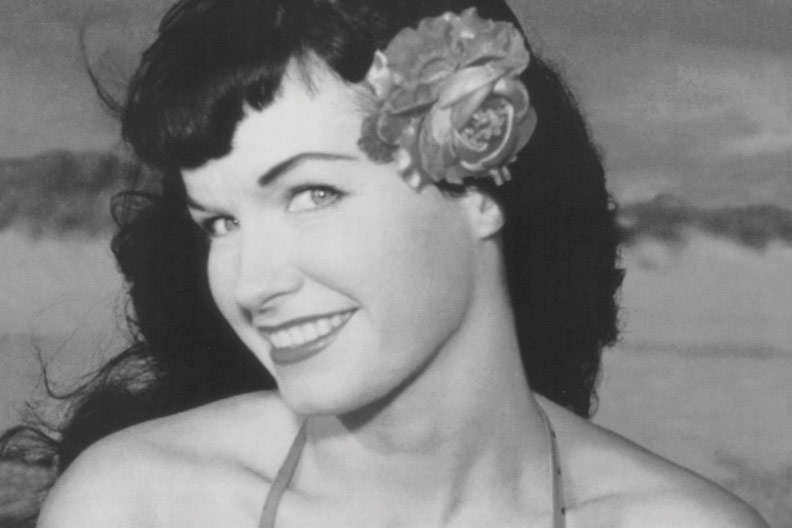
BETTIE, mid 20s. Don't let her all-American looks fool you. Trouble goes out of its way to avoid HER.
BETTIE, mid 20s. Don’t let her all-American looks fool you. Trouble goes out of its way to avoid HER.

When we, the reader, first meet an important character in your script, how do you describe them? What are the important details?

A lot of the time, the emphasis is on their physical traits – “tall”, “imposing”, “blonde”, “handsome”, “drop-dead gorgeous”, etc.

Or maybe it’s a simple adjective or two – “bubbly”, “funny”, “a nice guy” and so on.

These are okay, but you have to admit they’re kind of dull, which makes it more challenging for us to be interested in wanting to follow their story.

So how do you fix this? Time to ramp up that creativeness and really focus on what kind of person this character is, rather than what they look like. Unless a physical description is a key character trait, don’t worry about it.

One of the most memorable intros I ever read described the best friend of the teenaged protagonist – “James Dean cool at 15.” That’s it. Pretty effective, and in only five words.

Doesn’t this give you a better idea of what this character is like than say, “cool and aloof?”?  This is the kind of writing that catches our eye AND makes an impression.

A former co-worker of mine used to describe a very talkative friend as “If you asked him what time it was, he’d tell you how to build a watch.” See how it goes beyond the good-but-simplistic “chatty know-it-all”?

Cliched as it sounds, we really are painting pictures with words – not just for the story, but the characters in it. You’re already crafting a unique and original story, so why not develop a unique and original way to tell us about the characters in it?

This isn’t saying you should always strive to be clever and witty about it, but at least try for something different. This is just a small part of showing off your writing skills.

Take a look at how you introduce the characters in your latest draft. Does it really tell us what you want us to know about them? If not, how could you rewrite it so it does?

Q&A with 2014 Table Read My Screenplay winner Nick Schober!

With so many contest deadlines looming, here’s a tale of encouragement in the form of an interview with Nick Schober, winner of the 2014 Table Read My Screenplay competition.

I met Nick through Twitter (@nicschober). He’s a great guy.

Enjoy.

sundance 3

1. How did you get your start as a writer?

I guess I’ve always been writing, just for different reasons. In college I knew I wanted to work in the industry, but I was sure I wanted to be a director of photography… and then an editor.. then a director, and so on, and the only way to constantly hone those crafts was to write material. After I took a serious run at producing a few years ago, I realized writing was my favorite part of the process and I’ve been at it ever since.

2. What’s your script about, and how did you come up with the story?

GIVEN is a story about a wealthy widow who offers her vast fortune to a local slacker in exchange for one small favor… that he kill her. The concept originated as a “first 15” contest put on by The Writer’s Store. They provide a logline and everyone submits 15 pages based on that. I think the original logline was something about a New England matriarch offering her fortune to anyone who would grant her dying wish. I thought the twist of her asking someone to kill her would grab attention.

3. What was it about Table Read My Screenplay that made you want to enter?

I think I saw the emails about this contest shortly after I found out I did not win The Writer’s Store contest. I figured this was good a time as any to jump back on the horse. Besides that, the opportunity to go to Sundance and have your screenplay read by actors is a once-in-a-lifetime opportunity. Also, as with any good contest, they blast your script out to their network of producers and agents, which is the name of the game.

4. What was your reaction to winning?

I tried to play it cool when I got the call from the organizers but I promptly called my wife and yelled at the top of my lungs. It was pretty awkward considering I was still at work. You can’t help but wonder if you really have what it takes to do this, and things like this are a great signpost to look back on when you need encouragement. 
sundance 2

5. As the contest’s name says, there was a table read of your script at this year’s Sundance Film Festival. How did that go?

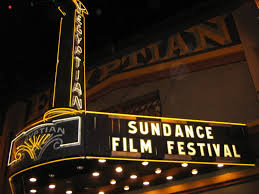
It was amazing. They had a conference room at the Waldorf in Park City and cast some excellent actors who really went for it, even though it was just a table read. Harvey Weinstein was having breakfast right outside the door. They also recorded the audio and sent it to me to for review. It was invaluable to hear your words spoken. You can truly understand the importance of timing, what works and what doesn’t.

6. What was your overall experience being at Sundance?

It was a blast. The organizers put us up in an amazing house walking distance from downtown. They set us up with a few movie screenings and also got us into a few parties. It was an intense exercise in networking, especially for a serial introvert, but I made a couple of good contacts.

sundance

7. What’s been happening for you and your script since then?

Since then, I’ve jumped headfirst into trying to get this sold. I’ve uploaded my script to The Blacklist, submitted to all the major contests, and recently started querying. I’m also developing a few other ideas and trying to write every day.

A hearty congrats to Nick!

There are lots of ways to establish a career as a screenwriter. Winning or placing in a contest is just one of them. So keep on rewriting and polishing that latest draft, send it out there and see how it goes.

And in case you don’t make it past the first round (which does happen), more contests now offer notes and feedback, so you can make a few more fixes to make your script that much better.

Good luck!