RIP, darlings

One of my biggest challenges when it comes to rewrites has always been letting go of what’s on the page now and making whatever changes are needed.

It’s taken time to learn to get better at this.

Such was the case with the current rewrite.

I was going through the previous draft, marking up what needed to be done.

I got to a scene that I loved, but ultimately realized that it simply didn’t need to be there. Broke my heart to take it out, but I had to do what was best for the script, not me.

There were a few scenes that had to be adjusted a bit as a result of that, which in retrospect was a pretty good thing. Those scenes are now tighter and help keep things moving along.

And it’s not like I can’t use the content of the cut scenes again. They’ll just be stored away for potential use in the future – for this script or possibly another.

Cutting that one scene has also resulted in being more open to doing more with other scenes. I’ve enjoyed working with the mindset of “Is there a different way to do this?” and then exploring the possibilities. It’s not uncommon to go through several versions before finding the one that works.

Don’t know how long it’ll take to get through the rest of the script, but I’m quite happy with how it’s going. This in turn makes me want to work on it more, so there’s a chance it could even be done sooner than expected.

I honestly think the end result will be a much better script. All because I was willing to get rid of/change material I thought was already good.

Good. Better. Getting there.

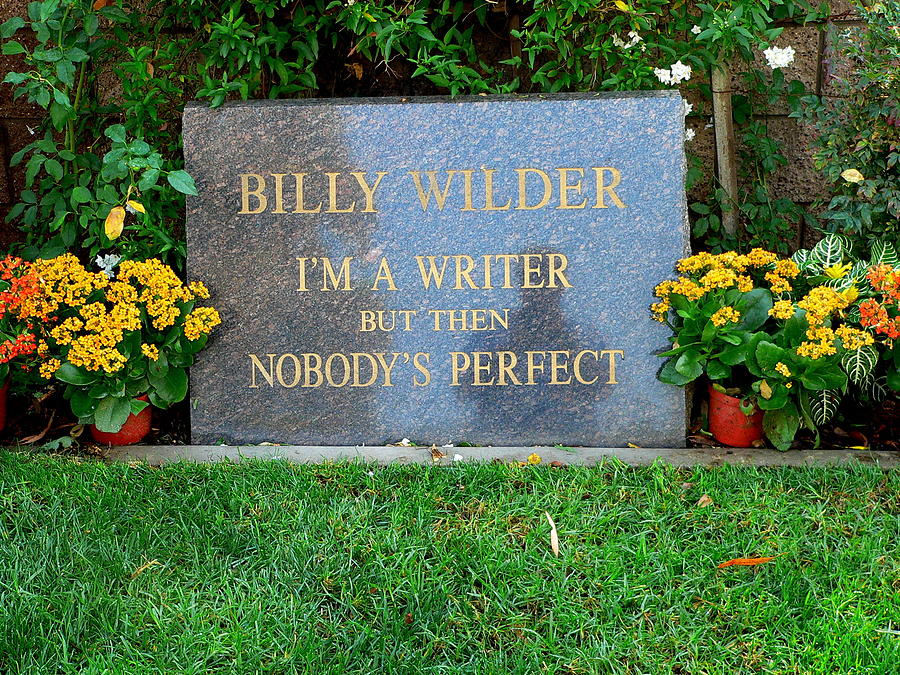
Billy Wilder
Never hurts to have a good role model*

Notes continue to come in for the pulp sci-fi spec, some contrary, many encouraging, and all chock-full of notable suggestions. With some coming from my trusted core of reliably savvy readers, there’s been one statement more than a few have included.

The gist of it is:

“This is the third script of yours I’ve read, and each one has shown a definite improvement over the previous one.”

It warms this writer’s soul to hear that sort of thing. And these are writers who pull no punches. They won’t hesitate to say something doesn’t work.

I’ve been working at this for a while, but it really feels like just the past few years have seen the most significant progress. Just goes to show what constant hard work can do, right?

Nor do I have any intention of slowing down. Doing my best to maintain a dedicated block of time and/or pages on a daily basis. The more you do it, the easier it gets (but is still tough).

The three scripts in question were all adventure-based, which enabled me to exercise a certain set of writing skills. With work now commencing on overhauling a comedy, an entirely new set will get the workout they deserve.

Crafting a sequence involving a train heist in the Old West, or a team of adventurers taking on a mad scientist? Piece of cake.

Writing a story involving everyday people in relatively normal (but funny) situations, peppered with smart (and funny) dialogue, all without the benefit of using special effects to enhance the story?

That is truly the next challenge to yours truly. It initially feels very daunting, but I’ve made it this far, and there’s no reason to think I can’t continue to push my way forward.

Should be a very interesting journey.

*Billy Wilder’s 10 Rules for Good Filmmaking (also applicable to screenwriting)
1: The audience is fickle.
2: Grab ’em by the throat and never let ’em go.
3: Develop a clean line of action for your leading character.
4: Know where you’re going.
5: The more subtle and elegant you are in hiding your plot points, the better you are as a writer.
6: If you have a problem with the third act, the real problem is in the first act.
7: A tip from Lubitsch: Let the audience add up two plus two. They’ll love you forever.
8: In doing voice-overs, be careful not to describe what the audience already sees. Add to what they’re seeing.
9: The event that occurs at the second act curtain triggers the end of the movie.
10: The third act must build, build, build in tempo and action until the last event, and then — that’s it. Don’t hang around.