A subject worth discussing

soapbox
Listen up, and listen good

Stepping onto my proverbial soapbox to utter a few thoughts on something that needs to be said.

If you’re part of an online forum, and you post your material in that forum seeking feedback from other members, you will get all kinds of responses. Some will be positive, and some will be negative – maybe to point of being outright condescending.

How do you respond to the positive ones?

“Thanks. I appreciate it.” Maybe elaborate a little, or a follow-up question or two. Possibly even ask to communicate with the person in private.

The negative and/or condescending ones?

“Thanks.”

That’s it. No matter how much you feel the urge to respond with a stinging retort written in ALL CAPS and a lot of exclamation points, just don’t. You asked for comments and you got ’em.

A thick skin is a necessity in this business. Arguing or getting angry because you don’t like what somebody said won’t help you or your writing, and it makes you look petty and unprofessional.

Now let’s address the other side.

Somebody asks you for notes, and based on the quality of the material, you do the best you can, trying to be as helpful as possible. Be honest with your suggestions of what needs to be fixed.

Does it have potential? Mention that. Are there problems? Identify them and how they could be fixed.

If the writing reflects an amateur, or a poorly constructed idea, point out how and why in a constructive manner. There’s no need to be insulting or talk down to them. Chances are they’re still learning, so they don’t know as much as you do.

They may not like what you have to say, maybe even going so far as to insult you and your experience, or deride your comments. But that’s on them. You’ve done your part.

So let’s review.

You want help? Take what you get, even if you don’t like it. After your temper cools down, take a serious look at what was said. There may be something in there worth using.

Somebody asks you for help? Be professional and as helpful as you can. Don’t hold their lack of experience against them.

No matter whether you’re giving or receiving, be patient, tolerant, and open-minded.

Keep that in mind, okay?

Thanks. The soapbox is now available.
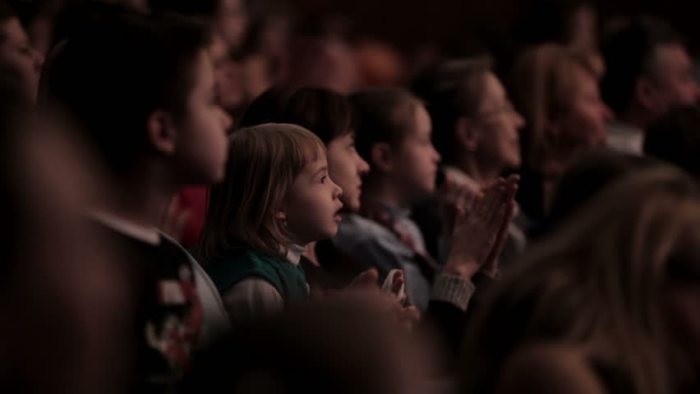
The appeal of appealing to a younger demographic

kids
Multiple generations, engaged and enraptured. Fine by me.

During a recent phone conversation with another writer, I’d mentioned having wrapped up work on the pulp sci-fi spec.

“What’s it about?” they asked. I proceeded to give them my 10-second elevator pitch, plus the “THIS meets THAT” combo.

“Huh,” was the response. “It sounds cool, but it also sounds like it would be a kids’ movie.”

I suppose that’s one way to look at it. My preference is “a rollercoaster ride of a story, fun for anybody from 8 to 88”. That’s always been my approach when I set out to spin a ripping yarn.

Was I supposed to view their comment as some kind of insult? As if there’s something negative or shameful about writing material that appeals to kids? Because that hasn’t worked at all for Disney or Pixar.

PIxar especially has a reputation for producing films that appeal to all ages. There’s been a lot written about the immense amount of time they spend on making sure the story is rock-solid. One of the most-read articles for screenwriting is based on part of their process, and those don’t just apply to animation; they’re for ALL screenwriting.

Let me also throw a couple of “kids movies” out there. You might have heard of them.

Star Wars. Harry Potter.

One’s been around for 40 years, with no sign of letting up, while the other just celebrated 20 years of entertaining readers and moviegoers.

On the surface, both are solid, simplistic stories about the fight of good versus evil. But is that all they are? Heavens no! There’s universal appeal, engaging characters who grow and change, themes being explored, conflict like you wouldn’t believe – all told through a filter of imagination. Don’t let the presence of lightsabers, magic wands, or animated, talking animals distract you from what’s really going on.

And let’s be honest. Both of those series have done more than okay at the box office.

Not too shabby for “kids movies”.

Now, I’m not saying any of my scripts are in the same arena as those, but a good story is a good story, no matter who its target audience is. And if it appeals to a younger generation as well as my own, what’s wrong with that?

And you know what else works with kids movies? Kids grow up, and eventually have kids of their own. What do they watch? The movies the parents enjoyed as kids.

Who wouldn’t want to write something that leaves a lasting impression on a young mind, and then see them pass their love of that story to later generations?

For me, that’s what it all comes down to – writing a script that tells a fun and exciting story that anybody could enjoy. And if that includes kids, that’s fine by me.

That’s not the question you should be asking

classroom
Class, who can tell me what “familiar, but different” means?

I see variations on this question a lot throughout many online forums:

What kind of script should I write?

Seriously?

And I say that in the least condescendingly way possible.

It amazes me that somebody who wants to write a script has to ask what they should write. Shouldn’t you already know? Isn’t that why you’re doing this in the first place?

Then again, I’ve always been a writer, so it was never a question of “What do I write?”, but more of “Which one do I write now?” and “How do I write this so it’s good?”

But back to the topic at hand…

My immediate response to the question in question is “Write something you would want to see.” But that’s my approach. Others may take a different stance.

One caveat – make sure whatever you write is as original a story as you can come up with that contains original characters and situations. Do whatever you can to make it your own. Readers will instantly recognize if you’ve “borrowed” something.

I recently read a script that was a blatant rip-off of a well-known franchise. Did the writer know this when they wrote it? I don’t know, but the actual concept behind their story seemed unique unto itself, with lots of possibilities, so it was actually kind of surprising and disappointing to see them follow that well-trod path instead of seeking out something new.

Something else to keep in mind – using well-known characters not created by you is a very, very bad idea. A writer friend has a connection at Marvel Studios who handles the non-stop influx of unsolicited spec scripts. No doubt your Spidey spec is brilliant, but you’re seriously fooling yourself and wasting your time.

Wouldn’t you rather your script be known for offering up something new and unique?

A lot of newer writers see what’s hot at the box office and think “I can crank out something like that in no time!” Also a waste of time. Trends come and go very quickly. What’s hot today could be ice-cold tomorrow. And you probably think you’re the only one to come up with some variation on that current big idea.

You’re not. It’s even money deals involving clones of that idea will be announced in the near future, all while you’re still churning out pages.

DON’T CHASE TRENDS. You’ll never catch up.

A writer I’ve exchanged notes with concluded our most recent email conversation with “Also wanted to pick your brain. I want to write a script about ____ . It’s an idea I’ve had for several years, but I don’t know if anyone would want to see it.”

Their concept seemed good with lots of potential, but also sounds very similar to a recent series on Netflix, which I thought increased the chances of inevitable comparisons between the two. But if it’s a story that’s been percolating for that long and they feel really passionate about it, then by all means, have at it.

As a spec writer, you have the freedom to write whatever you want. I suspect a lot of us are inspired by the films we grew up watching up to the ones we enjoy now.  Start there and see where it takes you.

Strive for originality, chums.

Your world. We’re just visiting.

tour group
Ooh! That looks like a vital piece of exposition!

Since you’re the one creating the world of your script, you know exactly what’s going on within it. Or at least you should. This doesn’t just refer to the events of the story. It’s a bit more extensive than that.

You know the world in which your story takes place. We don’t. It’s up to you to show us how things work in here. Some writers write under the impression that everything we need to know is right there on the page for us to see. They do, so how could we possibly not?

Sometimes the information we need to follow the story is presented gradually, or it might be thrown at us all at once in one big info dump (which runs the risk of too much too fast, resulting in something being skipped over). There are also times when we get nothing, so we and the protagonist experience everything firsthand as it happens.

Who hasn’t read a script and found themselves confused about “how things work here” because it wasn’t there, or only got a fraction of what they needed? Without that, your reader’s going to spend more time playing catch-up while trying to figure out what’s going on, which will take away from them being able to focus on the story itself.

You don’t want that.

This goes beyond genre. While stories of a more fantastical nature will require a little more explanation and/or exposition, even a story that takes place in the present day with normal, everyday people will require some kind of “get us up to speed”-type scenes.

One counterpoint to this – the lack of filling us in is intentional. Part of the enjoyment of the story comes from the gradual learning of information. An ideal setup for mysteries, but that’s all I can think of.

Personally, I find it more effective to fill us in as we go along rather than just dropping us in the middle of this new environment with the attitude of “You’re on your own. Good luck.”

Make it as easy for the reader to be able to follow along with what’s going on in your story as you do. Potentially difficult, but not impossible.

I speak from experience

SF running
Exercise, a view, and lots of time to think about your script

“Writing a screenplay is a marathon, not a sprint.”

Bet you’ve heard that one before, right?

It’s true. Learning how to write a screenplay takes time, let alone how to do it well. It might come easier for some, but no matter what your skill level is, it always remains a struggle.

And that feeling when you’re done (at least with the latest draft)? Euphoric sums it up quite nicely.

So that whole running metaphor is pretty apropros. Especially for me.

For those not in the know, I enjoy running half-marathons. Seriously.

I’ve run about a dozen or so the past few years. Like with the writing, it’s a self-imposed challenge and pushes you to keep moving forward. Believe me, there are definitely times during those races I just want to stop and catch my breath, but I don’t because I want to keep going and see what I’m capable of.

I usually finish somewhere just under 2 hours, which isn’t bad.

A few weeks ago, I ran a race in San Francisco and finished with a time of 2:02:56, which some might think is great, but I still considered a little disappointing.

This past weekend was another race – across the Bay in Oakland. The results of the previous race really shook me up. Was I once again going to fall short of my goal?

Only one way to find out.

I did my best to maintain a steady pace and continuously reminded myself that even though it was a challenge, I felt I had a pretty good handle on it. Oakland’s also a lot flatter than San Francisco, which probably helped.

The home stretch for this race is an 8-block-long straight line through downtown Oakland. At the finish line, there’s always a big digital timer. As I got closer, the numbers came into view.

1:54:30? Wow! And just a handful of blocks to go!

You know that feeling when you’re writing the last page of your script and FADE OUT is coming up fast and you get that sudden rush of adrenaline and you can’t believe the end is finally in sight?

Even though you’re exhausted and feeling totally spent, you can always find that hidden reserve of energy, which is just enough to get you to that goal.

Giving it everything I had, I poured on the speed (or at least as much as I could muster) and ran like a madman to that finish line.

End result – 1:54:59. Not only did I break the 2-hour mark,  but I just squeaked by my other personal objective of breaking 1:55.

All that self-doubt from before had been erased. I had given myself a goal and set out to accomplish it.

Notice all those comparisons to screenwriting that could be made?

Every script is your own personal challenge. Sometimes it’ll be easy, and sometimes it’ll feel like nothing is happening, but the important thing is for you to keep at it and not stop trying to reach that finish line.

Like with training for these runs, it requires a lot of work. You find the time to do it when you can, hoping each session yields a slightly better result than the previous one.

My current work on the comedy spec coincides with this latest round of training for my next race – early November, and again in San Francisco. Both script and race will be a little more on the challenging side, but by engaging in regular training, I’m fairly confident I can achieve the results I seek.

A little stretching, a few deep breaths, and off I go.

Let’s get moving, chums.