Ah, the sensation of liberation that comes from not holding back AT ALL when you really throw yourself into a rewrite.
That’s kind of how it’s been working out for the latest draft of my western.
What was originally anticipated as a nerve-wracking ordeal involving constantly second-guessing my choices has actually become quite a fun, thrilling, and surprisingly eduational experience.
Part of the initial objective was to flesh out the characters some more while keeping the story intact. The former seemed to pose the biggest challenge. Tough, but not impossible.
I figured the best approach was to take it scene by scene, starting with page one and the mindset of “what can change about these characters?”
I couldn’t say if it was having not looked at the script for several months, or just going into this with a “just have at it” attitude, but there was definitely something different about this time. Both for me and the story.
The words came, and I really like how it’s coming along so far. There are the expected slight modifications to the story, but nothing too drastic, and overall it feels a little more developed.
In the meantime, the “one scene at a time” approach seems to be working out just fine. I thought the script was pretty decent before, but now think there might actually be a chance the end result could be even better.
Last week, work on the comedy outline wrapped up a bit earlier than expected, so while I wait for the notes on that, I’ve decided to venture back into some territory I’d considered over and done with.
My western.
Although it’s done alright in some contests (and I suppose top 15 percent in the Nicholl isn’t too shabby), I really think it can be better. Plus, more than a few opinions and comments from totally non-biased outside parties confirm this.
As one set of notes so succinctly put it, “Don’t get me wrong. The story’s a lot of fun and the structure is solid. It’s the characters that could use more development. Nothing too drastic, but just enough to flesh them out a little more.”
Makes sense to me.
On top of that, a recent conversation with another writer, who is starting on their new western script, included mention of how I should read the script for UNFORGIVEN – even though that and my script are worlds apart.
I downloaded it and started reading it. Just a few pages in, and it absolutely confirms I need to step up my game. There’s no reason I shouldn’t strive to present that kind of quality, even in a script that would most likely be labeled a “popcorn-tentpole” kind of story.
Luckily for me, I’ve always enjoyed working on this story and am actually kind of psyched about jumping back into it. I thought it was pretty good before, and now hope to make it even better.
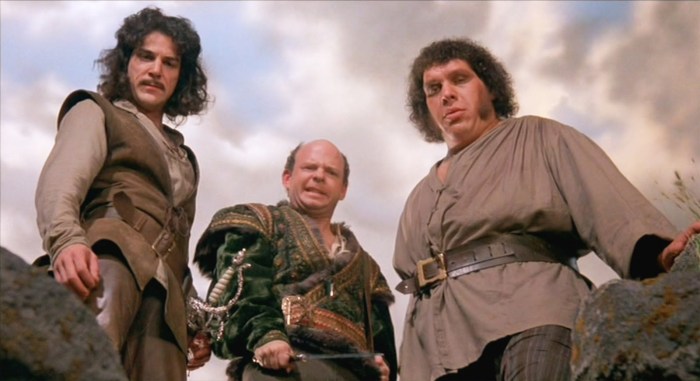
“You keep using that word. I do not think it means what you think it means.”
Amidst all the hubbub currently surrounding my ongoing rewriting efforts, I’ve been extremely fortunate to have received some high-quality feedback on each of them.
(Incidentally, concurrently working on three scripts may be a good exercise in productivity, but it sure is an exhausting one.)
Among this trio of projects is a round of notes on the pulp sci-fi.
Some great stuff being provided by my legion of savvy readers, which includes a comment made by more than one person.
But first, a little background…
As I mentioned, I refer to this script as “pulp sci-fi”. To me, it’s reminiscent of old-timey adventure (Flash Gordon, Doc Savage, etc), which is the kind of story I enjoy reading. It’s also the filter through which I wrote it, and had a great time doing.
What’s been extremely interesting is how people interpret that phrase.
A few readers tended to share my same opinion/viewpoint, and felt the story and script reflected that. Others thought calling it a “pulp” story indicated it would be somewhat darker and grittier (which it really isn’t). And there’ve also been some who weren’t sure if what’s on the page was supposed to be taken at face value or if I was intentionally satirizing the genre.
Quite a wide variety of opinions and reactions, all of which are perfectly valid. But the responsibility falls squarely on my shoulders to provide the story with the tone I find the most applicable.
Don’t underestimate the importance of tone. This may not be the best explanation, but I see it as the story’s attitude; how it presents itself. The writing should reflect not only the components of the genre, but also the emotions the story seeks/needs to invoke in the reader.
So while I offered up what I considered to be a fun romp of a tale through the fantastic, maybe with tongue slightly pressed against cheek, that’s not what how others saw it.
Admittedly, I probably could have cleared up a lot of the confusion at the outset by adding something like “It’s pulpy sci-fi in the vein of MEN IN BLACK, HELLBOY, and THE ADVENTURES OF BUCKAROO BANZAI,” as opposed to leaving it open to interpretation. For all I know, someone saw “pulp sci-fi” and thought, “Oh, like BLADE RUNNER.” Which it most definitely is not.
Laying down that kind of foundation lets the reader know what to expect before they start, but then it’s up to the writer to consistently maintain that tone for the entirety of the script.
You want to be a working screenwriter more than anything. ANYTHING.
So much that you find yourself occasionally succumbing to lapses in good judgment and common sense, resulting in actions that might initially seem sound and sensible, but in retrospect, become more of a “what the hell was I thinking?”
You want to make a good impression, and overstepping the boundaries of courtesy is a surefire way to have that NOT happen. Sadly, too many aspiring writers tend to ignore that and just plow forward, not taking into consideration the fact that they’re most likely sabotaging their own career before it even gets started.
So presented with the best of intentions, let’s go over a few of the basics:
-This is all on you. You want to be a working writer? Then you need to do the work. All of it.
There are no shortcuts.
The writing, editing and polishing. Researching reps, producers and production companies on IMDB Pro. Networking. Making and maintaining connections. DO NOT approach a total stranger either online or in person and have the first thing you say be “Hi. Can you help me?”
–Be patient and courteous. Everybody’s got stuff going on in their lives, so they might not get to your script right away. Much as you want a fast turnaround, you’re not a priority to them. DO NOT be pushy and bombard them with constant “Did you read it yet?” emails. Send it, give it 4-6 weeks. If you haven’t heard anything by then, send a friendly reminder (“Hey. Just wondering if you’ve had a chance to read MY SCRIPT. Thanks.”)
-Once you do get the comments back, send a thank-you note. If you agree with what they say, or think it makes some good points, say so. If the comments are negative, or at least not what you want to hear, DO NOT respond by arguing why they’re wrong. “You just don’t understand my genius” is never a good idea. They’re doing you a favor and providing their honest opinion. Just say thanks.
Rememeber: there are a lot of other writers in the exact same situation as you, and each and every one of them is spending just as much time figuring out some kind of plan to help them reach that goal.
Use your head while being polite and considerate to help you make a better impression.
-I’ve written about some of these topics before. Feel free to give ’em a look-see.
With the holiday shopping season now fully underway, you might be stumped as to what get that special screenwriter in your life, or maybe you’re a screenwriter with a desire to treat yourself.
Worry no more! Here’s a list of some holiday deals being offered by some well-known and exceptionally talented script consultants, along with a few books penned by some very savvy and creative scribes.
Keep in mind that a lot of these deals are time-sensitive, with more than a few expiring on November 30th, so act fast!
CONSULTANTS
-Need notes on your sci-fi script? Sci-fi screenwriter, Sci-Fi Circuit columnist for ScriptMag, and Called to Write Founder Jenna Avery’s sci-fi (and fantasy) script notes on sale through November 30th for $100 off. Find out more here: https://calledtowrite.com/product/script-notes
Need help showing up to write? Feeling blocked? Lost your writing mojo? Join the Called to Write Coaching Circle, Jenna Avery’s signature online program designed to help writers write every day. Save $50 on your first 28-day writing session with coupon code MAXIMUMZ. Find more and register here: http://justdothewriting.com. Next session starts on December 3rd, last day to register is November 30th.
–ScriptArsenal. 20% off Regular coverage, Comments-only coverage and Studio Notes – thru Thursday the 30th. Promo code “THANKS20”
-The fine folks at The Be Epic Experience are offering big discounts on all their services, starting at $100 off, through January 1st.
–Geoffrey Calhoun and We Fix Your Script. $20 discount on all script services, which includes a 15-minute phone consultation, if you use the code MAXIMUMZ.
–Friend of the blogHoward Casner. 5 pages of coverage for $40, and coverage, notes & a 1-hour one-on-one discussion for $125.
–Phil Clarke of Philmscribe. Use promo code BLACKNEWS via www.philmscribe.com/contact to get 20% off the Annotation, Analysis or A&A services for a 2018 consult through the end of November. Phil is based in the UK, so exchange rates and fees do apply.
–Steve Cleary. 30% off all screenwriting services. Make sure to mention this blog when contacting him.
–Barri Evans of Big Big Ideas. A special deal on her logline service just for readers of this blog. Using the code Maximum Z Pie in the subject line, send her an email that includes your script’s title, genre, and logline, and she’ll provide you with free feedback.
-Highstreet Script Consultation and Finish Line Script Competition. 6 pages of notes and a follow-up email for a rate of $125. Contact them here.
–Namita Kabilas of the NK Network. For a limited time only, join the Screenwriters Training Hub – your very own flexible online mobile screenwriting resource with access to regular monthly training videos, worksheets, expert tips, e-books, audiobooks, hosted webcasts on good writing AND one-to-one mentoring with Namita all for just $79 a month. Namita is based in the UK, so exchange rates and fees will apply.
–Jim Mercurio of A-List Screenwriting. Half-price on his 6-disc instructional DVD set and his Snapshot Evaluation script read service through November 30th. Plus, every order includes a complimentary copy of Jim’s Killer Endings DVD lecture.
-Phil Parker of Stories by Phil. 20% off script services, which includes a 30-minute Skype session. Phil is based in Australia, so exchange rates and fees will apply.
– Looking for a laugh? Half-Loaded by Don Holley. Don wrote the cult comedy National Lampoon’s Loaded Weapon 1, and this memoir chronicles his “wildly unlikely odyssey from obscurity to success and back again.”
-Have a young reader, aspiring comic artist, and/or comics aficianado on your list? Can’t go wrong with The Chapel Chronicles by Emma T Capps.
-Into a little sci-fi adventure? Only 99 cents for the Kindle 3-book boxset of Syndicate Wars by the very prolific Justin Sloan.




 Maximum Z