Works for me

Got my own way of doing things
Just doin’ my own thang

Over the past few months, I’ve made a sincere effort to expand my network of writers, filmmakers and industry folks. I can honestly say it’s been a lot of fun and I’ve had the benefit of connecting with a lot of fantastic people, both online and in person. Added bonus –  my self-confidence has shot through the roof.

Trust me. I’m phenomenal.

See?

This really comes in handy especially when I’ll read about someone else’s career taking a huge step forward (sale, option, deal, etc.). It stings at first, but then I remind myself that the only thing that person and I have in common is that we’re both writers. Their path and mine have been totally different and will continue to be so.

My turn’s coming, and I’m plenty experienced at being patient. You have to be in this business.

It doesn’t me do any good to compare myself to others. How I write, what I write, what I say to people, and so on. I’ve got my own totally unique approach to all of it. It’s taken a while to get to this point, and I like how it’s going, not to mention where it’s headed.

In the meantime, I keep writing (putting the comedy on hold to revamp the outline for the pulpy adventure, with ambitious plans for the finished product), reaching out to more people (great face-to-face meetings this week with a local actor and a writer) and continue the striving towards the ultimate goal.

Ask an Astonishingly Productive Script Consultant!

Bill Boyle

The latest in a series of interviews with script readers and consultants who would be worth your while to work with if you want to get your script in shape. Today’s spotlight is on writer-educator-consultant Bill Boyle of www.billboyle.net.

*editor’s note – Bill passed away in July 2018

Veteran screenwriter Bill Boyle has been involved in the film industry in both Canada and the U.S. for over 25 years as a writer, director, agent, producer, story editor, and mentor. Mr. Boyle has the rare honor that every screenplay and television series he has written has been produced or optioned. He currently has four screenplays produced and a fifth scheduled for production. Two others are presently under option. Additional information on the films can be found at www.billboyle.net or at www.imdb.com

In addition to screenwriting, Mr. Boyle devotes a significant amount of his time sharing his experience mentoring younger screenwriters. He teaches screenwriting at UCLA and has lectured throughout Canada and the United States.

Mr. Boyle is one of the most popular script consultants in the industry. He has consulted on over 1,000 screenplays worldwide. Creative Screenwriting Magazine rated him among the top 10% of screenwriting consultants. He is the lead proponent of a visual style of screenwriting called “The Visual Mindscape of Screenplay” that focuses on the visual and visceral aspects of screenwriting. His book of the same name was released in 2012.

1. What’s the last thing you read/watched that you thought was incredibly well written?

I am a huge fan of Jo Nesbo’s novels. His visual exploration of the environments he creates are so visceral that once read it is impossible to ever forget them. As for screenplays, I recently read Nightcrawler and found it exceptionally well-written.

2. How’d you get your start reading scripts?

If you mean reading scripts as a job, I was never actually a script reader. I was a manager in Canada and read many scripts that my actors were up for, as well as reading the work of my own screenwriters and playwright clients.

3. Is recognizing good writing something you think can be taught or learned?

It needs to be taught, but not taught as in learned; taught as in establishing the ability to connect fully with the writing and to remain focused. That ability and willingness to be fully immersed in the screenplay allows the reader the conduit into the rhythm, pacing and flow of the narrative. Sounds obvious, but it is my experience that the vast majority of writers ‘skim write’, which is to say they focus all of their attention on what they want the scene to say and little on the atmosphere and pacing of their scenes.

4. What are the components of a good script?

A good script is one that captures the visual and visceral imaginations of the reader. Actually, it’s a misnomer to say we’re writing for the reader, when actually we’re writing for the viewer within the writer. Besides being a visual expression of the story, a good script also expresses the proper pacing and atmosphere within each scene. These are the two elements most often missing in a screenplay.

5. What are some of the most common mistakes you see?

-Detailed Action

-Skim writing

-Blueprint Narrative lacking pace, atmosphere and visual expression

-Overwritten dialogue that lacks a pulse.

6. What story tropes are you just tired of seeing?

The two things that disturb me the most are how fundamentalist screenplay instructors and gurus have poisoned the creative minds of so many young writers.  This attitude of “my way or the highway”, or the ever-growing list of things a screenwriter must not do (Voiceovers, Camera Angles and Directions, Character Descriptives, Flashbacks, etc) is absurd.

For me the big one is the white on the page dictum. Of course, part of the art of screenwriting is the ability to tell the story in a succinct, near-haiku style. This form of brevity allows the story to flow and remain in the Absolute Present Tense. But this should never go beyond the point where it strips the narrative of its creative purpose.

I actually believe that white on the page is a way of devaluing the writer’s role in the filmmaking process. I seriously question when and why white on the page become more important that what is on the page.

7. What are the 3 most important rules every writer should know?

-Screenwriting is first and foremost a visual expression. Whether you choose to ignore it or not there is always and image on the screen.

-Establish pacing and atmosphere in your scenes so as to create a visceral experience within the reader/viewer

-Every action, element and scene of a screenplay exists in the Absolute Present Tense

8. Have you ever read a script that was an absolute, without-a-doubt “recommend”? If so, could you give the logline?

A script by Canadian screenwriter Laura Beard called ‘A Quiet and Distinguished Gentleman’. It was about a French Catholic detective who must overcome the bigotry of an English Protestant city and police force to solve a brutal axe murder in 1930. There are things she does with that script that to this day I still use in my lectures. A brilliant and very clever piece of work.

9. How do you feel about screenwriting contests? Worth it or not?

I am not a fan of screenwriting contests. Before I explain why, let me make the distinction between contests and fellowships. I think the fellowships (Nicholl, Praxis, Disney, etc.) are excellent programs.

I swear to god I have never heard a ‘true’ story of someone having a script produced based on a contest, which, considering how many there are out there, is rather shocking.

This idea of letting the writers know that they have moved to the next tier and then the quarterfinals, semifinals, etc., is their rendition of Three Card Monte. They let you think you win for a while so that you come back for more. What other reason is there?

10. How can people get in touch with you to find out more about the services you provide?

Check out my web site www.billboyle.net. You can also sign up for my newsletter, blog notices, online course dates and when spaces open up for my Unlimited Script Mentoring Program.

11. Readers of this blog are more than familiar with my love/appreciation of pie. What’s your favorite kind?

I will go for pretty much anything except the pie in The Help.

My 52 hours in the Southland

Just like being there!
This is exactly what it looks like!

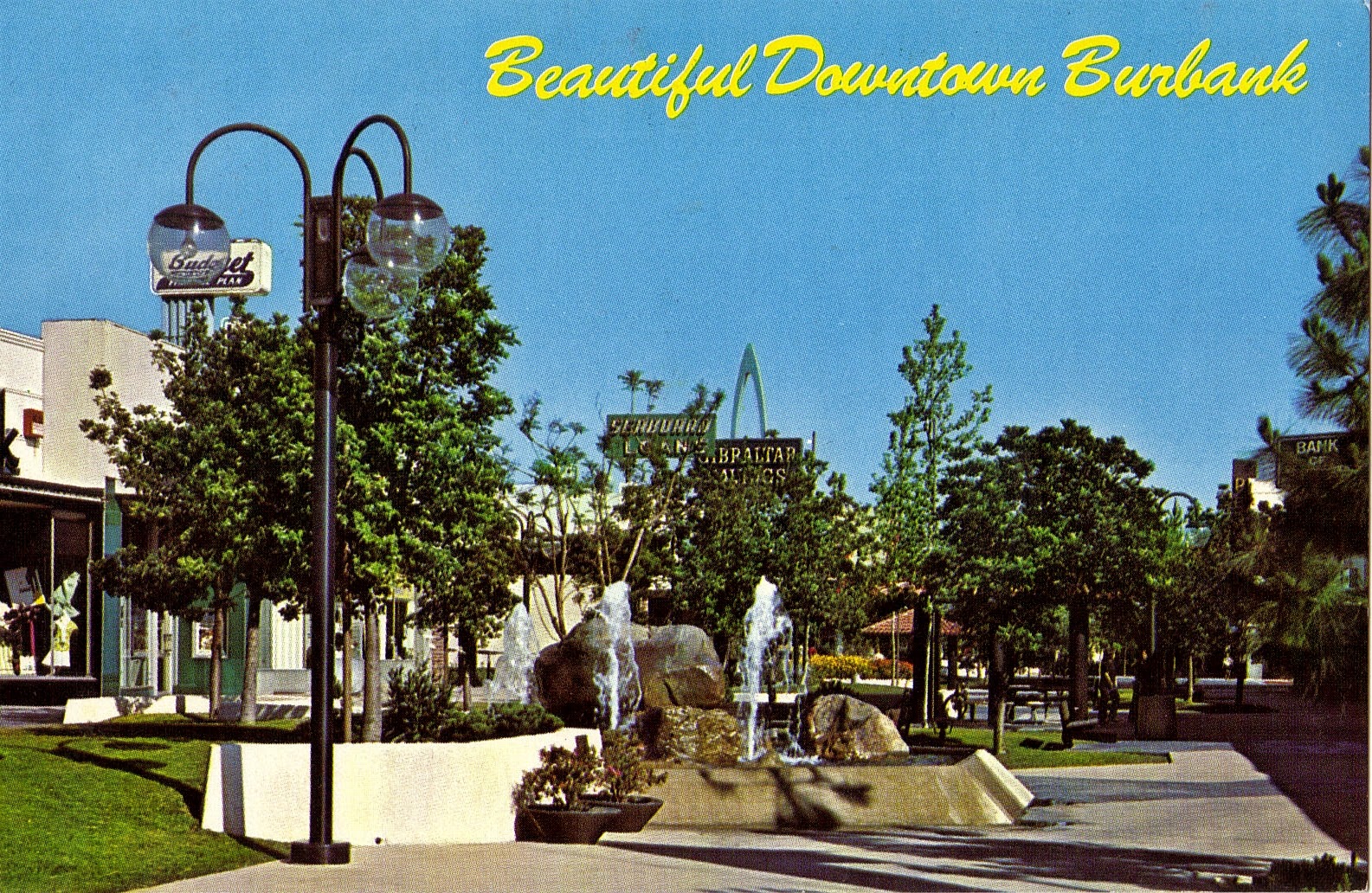
As all you phenomenal readers/followers out there may be aware, I was in Burbank last weekend for the Great American Pitch Fest.

Simply put, attending was one of the best screenwriting-oriented decisions I’ve ever made. I’ll get to the vaguely specific details about that in just a moment, but first, allow me to go over some of the supporting topics, starting with…

Networking

I came armed with a new batch of business cards and the attitude of “Dammit, I’m gonna meet people!”

And I did. At the Friday night mixer. At the numerous classes/panels/workshops on Saturday. Even just stopping to introduce myself to folks sitting around a table in the hotel lobby.

Many are first-timers, nervous at attending one of these kinds of events. Certain that everybody else is a seasoned pro just brimming with confidence, whereas you’re feeling hesitant to even open your mouth and say something.

You know what? Almost everybody feels that way and is a little nervous on some level. Sure, others are a little more extroverted than some, but as I can personally attest, it’s a lot more fun when you get to know people. Besides, why pass up the opportunity to expand your personal network? That writer you just met from halfway across the country could turn out to be a vital asset somewhere down the line.

On a more personal note, I have to mention that the weekend was also a golden opportunity for me to actually meet several of my “Ask a Script Consultant!” interview subjects, including Pilar, Lee, JG, Signe, Tracee, and Steve. The interactions weren’t long, but each proved to be just as charming in person as they are in print.

Pitching

The whole point of the weekend, and why I was here. First, the prep.

As I mentioned, there were panels aplenty where a lot of advice was given out (and sometimes contradicting something else you just heard). I had the benefit of having signed up for the pitch boot camp, where you and another writer would give your pitch, then exchange suggestions on how to potentially improve it.

I polished and honed the pitch for my western over the course of about six or seven run-throughs to the point where I had it down perfectly, then used that as a template for the fantasy-adventure.

As intimidating as doing this is, it all comes down to you being comfortable while having a pleasant conversation with somebody else about your story. The objective is to get them so interested that they really want to read your script. It’s not easy. Listening to other pitches, some writers would give vague story details, while others might go into too much detail.

As was pointed out, you’re also pitching yourself. You’re showing that you’re passionate about the work, hopefully have a pleasant personality, and are someone people would enjoy working with.

Now, a rundown of the results from the actual pitches:

(side note – As I would sit down with each person/pair, I’d ask how they were doing/how their day was going/etc. I’d rather start things off pleasantly rather than just launch straight into the pitch. Everybody was in good spirits throughout the day and seemed to be enjoying themselves. Many added that the quality of the material being pitched was very impressive.)

-13 total (although it felt like more)

-Two said “Thanks, but it’s not for us”

-The rest asked for a one-pager. More than a few asked “What else have you got?” (followed by handing over the other one-pager)

-Just about everybody said, “Wow! That was a great pitch!”

-One script request

-Two asked for follow-up emails

-“This sounds perfect for us!”

-“This is exactly what MAJOR PRODCO is looking for!”

-“We have to continue this conversation offline. Here’s our card. Call us.”

To say confidence levels were running high at the end of the day would be an understatement.

Epilogue

-All of my follow-ups have been taken care of. Since each one of them is also dealing with a lot of the pitches they heard, as well as working on their current projects, I expect it’ll be a while before I hear back from anybody. As always, fingers firmly crossed, hoping for the best while I bide my time and return to working on my assorted projects.

-Turns out I’m actually really good at pitching in person, or at least in a face-to-face scenario. Too nervous to do previous pitches via Skype, I’d always submitted a written one, which yielded zero results. This new confidence and willingness to be seen makes me feel that I’d have a much better chance of success in the future.

Conclusion

I’d started the weekend feeling very nervous and anxious about whether or not I’d do a good job. As time passed, I was able to relax and enjoy myself, which probably played a big part in how it all turned out. I had a great time, and left feeling closer than ever before to getting a professional writing career going.

If you’ve never been to a pitch weekend, I highly recommend it. You’ll meet lots of great people, make fantastic connections, learn how to get the most out of your pitch, and just have an awesome time.

-My only complaint was that since time was very limited, and I didn’t have a car, the enjoyment of pie did not take place. Maybe next time.

Ask a Significantly Astute Script Consultant!

Laurie Ashbourne

The latest in a series of interviews with script readers and consultants who would be worth your while to work with if you want to get your script in shape. Today’s spotlight is on writer-producer-consultant Laurie Ashbourne.

After seeing Who Framed Roger Rabbit in an old theater in Philly, Laurie knew that she had to be a part of that process.  Within 6 months she was in Disney Feature Animation‘s new studio in Florida working on a Roger Rabbit short and The Little Mermaid, and stayed on through the production of Lilo and Stitch. Leaving that cocoon to create and own her work, she quickly segued to live action and documentaries as a writer, producer and script supervisor.

With four features she wrote as work-for-hires in production, a dozen ghost- writing films and pilots in development, an independent animated feature in pre- production, an original story she wrote (10-31) was recently announced on the fast-track to production with acclaimed producers Eli Roth and Roger Birnbaum and a bio-pic she wrote is in early stages with Bohemia Group Originals.

Laurie is also longstanding story analyst for the likes of Amazon Studios Feature Films and Austin Film Festival.
In addition, she oversees several projects in development via her company, LA Story Studio. Her documentary work continues as well, as a producer for iconic director Robert Greenwald’s Brave New Films banner where she just co-
produced, SUPPRESSED – the fight to vote (2020), and RACIALLY CHARGED (2021), featuring two-time Oscar winner, Mahershala Ali.

1. What’s the last thing you read/watched that you thought was incredibly well-written?

I recently read a screenplay for a competition that was amazing. It was so well-paced and had such a perfect economy of words, twists and great characters – I wish I could share it with you, but I have no doubt that sooner than later everyone will have a chance to see it on screen.

For watching, the film LITTLE BOY. About 4 years ago the casting director asked my son to read for the part, so I was sent the script. It was such an emotional story that read really well, even though it broke some traditional pet peeves of mine, I completely overlooked them because I was so engrossed in the story. My son ended up sending in a video read because I was on a job in Virginia AND he had just lost his 2 front teeth so we knew the read wouldn’t go over at its best. Regardless, we went to see it (and I have to say the boy they had for the lead did a great job). I immediately could see where they had to change some things but it mostly stayed true to the script. I enjoyed the film and it was completely emotional, but I could definitely see how it read better than it played.

2. How’d you get your start reading scripts?

My first job in the industry was with Walt Disney Feature Animation, and as a department head I was in on a project from development through to final reels. But I didn’t start reading them professionally until I left the company to work in independent film, over ten years ago.

3. Is recognizing good writing something you think can be taught or learned?

The tenements of the craft can be taught easily but if a sense of story isn’t there then those ‘guidelines’ become hard and fast rules that can overlook a good story and what it needs to be brought up to industry standards. Learning story is possible, but it’s not for everyone, those that it is for can’t let it go. I’ll use my son as an example again. He will watch a movie until he knows it by heart and then pick apart the structure and characters, all by his own will. He said to me the other day, “When a movie does well, they automatically make a number two, and they do it quickly, and when that doesn’t do well they spend more time working out number three. Number twos always stink.” He’s 10, so I think it’s safe to say that a sense of story is ingrained in his psyche with no teaching other than immersing himself in something he enjoys.

4. What are the components of a good script?

Characters with an emotional want that comes across as genuine – in this case it’s the difference between a homeless person holding up a sign that says “will work for food” and one that holds up a sign that says “hungry, broke please give”. The audience is much more likely to attach themselves to a character who is willing to do what it takes to survive – the character that is willing to work for his food.

Craft contains a lot of things that get a bad name as hard and fast rules, and it’s true that if you are trying to break in you have to look like you are willing to adhere to industry standards, truth is your craft demonstrates mastery of cinematic story SOME formatting issues can be overlooked. So at the top of the mastery of cinematic language is, giving the actors something interesting to do that advances the plot and peels back the layers of their character. This does not mean writing verbose prose; that is not cinematic. Cinematic is thinking like a director in your mind, but conveying that action in words that do not include camera direction.

5. What are some of the most common mistakes you see?

-Misuse and abuse of parentheticals and exclamation points

-Typos and poor formatting

-A misunderstanding of scene headings in content and purpose

-A great idea poorly executed, usually in character and pacing

-A poor balance of dialogue and action (which is usually because of way too much dialogue)

6. What story tropes are you just tired of seeing?

It seems to be cyclical; every year there is more of one than another, so I guess that falls into chasing trends. Right now, there seems to be a lot of smaller character pieces, which is good for independent film, but with specs that are trying to break in (rather than going out and producing the indie on your own), it’s really difficult to get behind a moody character wandering the town or country instead of facing an uncomfortable truth. So it goes back to the homeless analogy – why do I care about this person, and please make it interesting without a having a diary in voiceover.

I admit it’s a bit of a catch-22, it’s also very difficult for an unknown to break in with a tentpole, but there is a happy medium where there are just enough elements to give the audience and producers something worth the investment of time and money.

7. What are the 3 most important rules every writer should know?

-Your material will not resonate with everyone, but if it’s not resonating with anyone, it’s time to analyze those notes you thought were shit.

-Write because you have to get a story out of your system, not because you want to strike it rich or win a contest.

-Let the audience (or reader) get to know your character through the action we see them take on screen, not via a laundry list of their traits.

8. Have you ever read a script that was an absolute, without-a-doubt “recommend”? If so, could you give the logline?

Sure. I’ve had the pleasurable honor to move a lot of scripts forward and nothing makes me happier than to see writers I worked with or read be working in the industry. Frankly, most scripts that come to me don’t have a logline, and I craft one for the coverage – most contest scripts don’t come with loglines. Loglines when done well are a craft unto themselves and contests are won on these concepts, but a great logline does not make a great script. This goes back to one of my top three: Most great ideas fall short on execution and again, I really think that comes down to sense of story. I personally write a logline before (during and after) I write a script. Writing it out at the start helps shape your outline. But just as the outline will change as you write, the logline should too, by becoming tighter.

I recently read a logline on LA Screenwriter called The Muffin Men – it was really brilliant. But who knows if the script is?

9. How do you feel about screenwriting contests? Worth it or not?

Yes, but do your homework. There are more scams than legitimate career changers. It’s worth it to get your script in top-level shape and submit to the top-tier contests (which there are less than 10) the odds are tougher due to the number of submissions but if you seriously want to advance your career, there’s no use in wasting money on the Podunk USA’s screenplay competition.

10. How can people get in touch with you to find out more about the services you provide?

My company at LA Story Studio, my blog 1st 10 pages, or via Stage 32 – https://www.stage32.com/LAstory.

11. Readers of this blog are more than familiar with my love/appreciation of pie. What’s your favorite kind?

I’m not much for desserts, but I like apple if it’s fresh and not overly gooey, or key lime. When I was a kid I was all about Tastykake cherry pie.