From asking to being asked

Nothing like a receptive ear (and the person connected to it)

Compare the most recent thing you wrote to the very first thing you wrote. How much of a difference is there?

One thing’s for certain: it no doubt took a lot of hard work and learning to get you from your skill level then to what it is now.

But you didn’t do it alone, or in a vacuum. You had help along the way from countless resources. It might have come from a book, a class, a writing group, or the occasional someone with more experience willing to help out.

When I started out, that was me. I got my hands on as many books as I could (the one I still recommend – Story Sense by Paul Lucey). Classes weren’t really an option, so I read a lot of scripts and attended a few seminars and expos when I could. I also had the good fortune to be involved with a few writing groups. A lot of this was also in the early days of the internet, so online resources and networking were nowhere near the levels they are now.

But what definitely helped the most was getting notes and feedback. The more fresh eyes you can get to take a look at your work, the better the end result will be. One stipulation: it depends on who you ask. Specifically, someone who really knows what they’re talking about, and whose knowledge and opinion you trust.

This has made a significant difference for me, such to the point that I now have a core group of trusted colleagues I can rely on for quality notes, and I’ve done my best to return the favor to many of them when possible.

And in recent months, as my network has grown and I connect with more writers, I’ll occasionally get an email asking along the lines of “If it’s not too much trouble, would you take a look at this and let me know what you think?” A script. Some pages. A logline. What have you.

I honestly never expected to be on the receiving end of that question, but, schedule permitting, am always happy to help out when I can. It’s the least I can do. Hopefully my notes will give them the help they need.

I don’t claim to have all the answers, but it’s kind of nice to think that I might be able to help somebody in the same way others did for me in the past.

Ask an Agent-turned-Script Consultant!

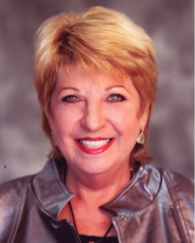
Michele Wallerstein

The latest in a series of interviews with script readers and consultants who would be worth your while to work with if you want to get your script in shape. Today’s spotlight is on Michele Wallerstein.

Screenplay, Novel and Career Consultant, Michele works with writers to help get their work into shape so that it is marketable for the Hollywood community and/or the publishing world. Michele’s career consulting consists of critiquing your projects and/or having personal career conferences to answer questions that writers have about their creative work as well as questions about the business side of their creative life. Michele is the author of: “MIND YOUR BUSINESS: A Hollywood Literary Agent’s Guide To Your Writing Career”.

Prior to becoming a Consultant, Michele was a Hollywood literary agent where she represented Writers, Directors and Producers in Motion Pictures, Movies for Television and Television Series and has sold $1 Million spec scripts. Michele served as Executive Vice-President of Women In Film and was on the Board of Directors for many years. She owned The Wallerstein Company and guided the careers of writers such as Larry Hertzog (Tin Man, La Femme Nikita, 24), Christopher Lofton (Robinson Crusoe, Call of the Wild, Scarlett, True Women), Peter Bellwood (Highlander, La Femme Nikita), Bootsie Parker (Booty Call, Married, With Children, The Hughley’s), and many others.

Michele has been a Guest Speaker at numerous Film Festivals, Pitch Fests and Writer’s Groups all across the country. She teaches the ins and outs of the business of your writing career as well as how to get the most out of your material.

1. What’s the last thing you read/watched that you thought was incredibly well-written?

I adore the writing on “Downton Abbey” on PBS. Their character delineations are superb. The dialogue makes the stories come alive. Unfortunately, I rarely go to theaters for movies because most of them don’t seem to be made for grown-ups.

2. How’d you get your start reading scripts?

I began reading scripts about 100 years ago when I was an assistant to a literary agent. After becoming an agent, I continued to read everything I could get my hands on. These experiences gave me a world of knowledge and have been a great help to me as a screenplay consultant.

3. Is recognizing good writing something you think can be taught or learned?

I’m not so sure it can be taught or learned. Anyone can learn the basics of screenwriting by taking classes and reading some of the many books available. However, understanding human nature and the psychology behind people’s actions and reactions comes with life experiences. If one doesn’t understand these things they will never get the importance of great dialogue.

4. What are the components of a good script?

In my experiences as an agent and as a consultant I find that adhering to the basic 3-act structure is invaluable. Along with that a writer must be able to write characters with heart, feelings, emotions and individual personalities. Grammar, spelling and syntax are also keys to good writing.

5. What are some of the most common mistakes you see?

I often find that the characters are uninteresting and I don’t care about any of them. It’s also common to find people who try very hard to write something unusual and it comes across as too complicated, far-fetched or dull. If written well, a thriller, mystery, love story or romantic comedy can be a standout showpiece for a good writer.

6. What story tropes are you just tired of seeing?

I’m quite tired of action films and films with an abundance of blood and guts. Too many people have become dulled to violence and those scripts are written without decent stories or characters.

7. What are the 3 most important rules every writer should know?

-Follow the accepted 3-act structure.

-When writing spec scripts it is a good idea to do at least 3 in the same genre.

-Have your scripts read by vetted professionals prior to trying to land an agent.

8. Have you ever read a script that was an absolute, without-a-doubt “recommend”? If so, could you give the logline?

When I was an agent I read a spec by a new, young writer that knocked me out. It was a love story with lots of fantastical action about the discovery of the Garden of Eden. It was gloriously written and I sold it for close to $1 million within 2 weeks of reading it.

9. How do you feel about screenwriting contests? Worth it or not?

Contests, pitch fests, seminars etc., can all be very worthwhile if one knows how to make contacts and to follow up with those people. It is a great place to meet executives who can help move your writing career forward. I explain this in detail in my book “MIND YOUR BUSINESS”.

10. How can people get in touch with you to find out more about the services you provide?

I am always happy to help writers and they can email me at: writerconsultant67@gmail.com. I have a monthly blog for writers: www.wwwconsulting.blogspot.com. Writers can also check out my online course Moving Your Writing Career Forward via Screenwriters University.

11. Readers of this blog are more than familiar with my love/appreciation of pie. What’s your favorite kind?

I do love warm peach pie with a dollop of vanilla ice cream.

Feeling triumphant, if only for a few minutes

By the time you finish reading this sentence, I'll already have gotten back to work
By the time you finish reading this sentence, I’ll already have gotten back to work

Well, it’s done. I got to type in those glorious words “Fade Out”, thus bringing to a close the massive rewrite of the western.

The script now clocks in at a respectable 114 pages. No reason a few more can’t be trimmed with some diligent editing and polishing.

Normally this would be the part where I’d say how long this has taken, but to be honest, I really don’t know. I haven’t been keeping track. Two months, maybe? Something like that.

But the important thing is that I got it done. What a grand feeling of accomplishment. It’s quite nice.

All that work and effort has paid off, resulting in a pretty solid piece of material to show for it (if I do say so myself).

As much as I’d like to sit back, rest on my laurels and enjoy the moment a little longer, there’s still a lot of work to be done. Once this latest round of editing is done, the call goes out to friends and trusted colleagues for feedback, which will no doubt result in more editing and polishing. And then it’s on to shelling out some bucks for professional notes.

From there? I don’t know. Contests? Query letters? That stage is pretty far down the line, so not too worried about it just yet. Right now it’s all about making the script as bulletproof as it can be.

During this entire time, when the opportunities present themselves, work resumes on the low-budget comedy, the mystery-comedy and possibly the pulpy adventure. Feeling confident at least one, possibly two, could be done by the end of the year.

All part of the never-ending process.

Ask a More-Than-Ready-for-Prime-Time Script Consultant!

Jen Grisanti

The latest in a series of interviews with script readers and consultants who would be worth your while to work with if you want to get your script in shape. Today is about writing for television, with the spotlight on Jen Grisanti of Jen Grisanti Consultancy, Inc.

International speaker Jen Grisanti is an acclaimed story and career consultant with her own firm, Jen Grisanti Consultancy, Inc., and a writing instructor for Writers on the Verge at NBC. She spent 12 years as a studio executive, including working as VP of Current Programming at CBS/Paramount. Jen also blogs for The Huffington Post and is the author of Story Line: Finding Gold In Your Life Story, TV Writing Tool Kit: How To Write a Script That Sells, and Change Your Story, Change Your Life: A Path To Your Success. She teaches classes for TV Writers’ Summit (LA, NYC, London and Israel) and Story Expo. She has taught at the TV Writers’ Studio (Australia), Scriptwriters’ Network, The Screenwriting Expo, and The Great American Pitchfest. Jen has also served on panels for the WGA, Scriptwriters’ Network, Final Draft/The Writer’s Bootcamp, and ScreenCraft. Her company hosts online Storywise Seminars.

1. What’s the last thing you read/watched that you thought was incredibly well-written?

The best movies I’ve seen recently include: The Imitation GameGuardians of the GalaxyLocke, and Chef.

Some of my other favorite movies from the past I think are incredibly well-written include: The Lives of Others, The King’s SpeechThe Untouchables and Argo.

2. How’d you get your start reading scripts?

After studying Communications with TV & Cinema at USC, the first job that paved my way to where I am today was working as an assistant to Aaron Spelling. While working in his office I began to voraciously read scripts. Spelling was my mentor. We had a routine where I’d read all of the scripts for the current shows he had on the air and he’d review my notes and tell me what worked and what didn’t. I learned so much about what makes story work by watching him in the edit bay during rough cuts. I got my Bachelor’s at USC, but I always say I got my Master’s degree in TV in the Spelling office. It was the best place to learn.

I climbed the ladder while I was at Spelling and eventually ran Current Programming covering shows including Beverly Hills 90210, Melrose Place and 7th Heaven. I went on to become Vice President at CBS/Paramount where I covered shows including: Numb3rs, Medium, NCIS, The 4400 and Girlfriends.

3. Is recognizing good writing something you think can be taught or learned?

I believe that for some, writing comes naturally. They have a sense of their voice from the start. They may need help with structure, but the voice is there.

With others, I do believe it can be taught or learned. I’ve definitely seen this happen many times in my career. There is no greater reward than to see the growth of a writer, to help guide them in finding their voice and to help them understand how to use story structure in the best way possible to bring their voice to life.

4. What are the components of a good script?

The components of a good script are a strong trigger incident that leads the central character into a dilemma. This creates empathy. Then, the choice that they make as a result of the dilemma defines the goal. We should be clear on what the central character wants and why they want it. Another thing that really adds to a good script is when the personal dilemma is connected to the professional pursuit. With this, when the writer comes from a place of emotional truth, it really helps to connect what they are trying to say.

A strong script should have a concept we can feel and a story with a clear message.

5. What are some of the most common mistakes you see?

We don’t know what the central character wants, or we don’t know why they want it. If you don’t know what the central character wants or why they want it, then there’s no rooting factor. The central character reacts to things that happen to them versus taking action toward the goal, giving you a reactive hero instead of an active one. The obstacles happen to the central character versus being a result of an action that the character took. There is no external stakes arc. We don’t know what the worst thing is that can happen if the central character does not achieve their goal.

6. What story tropes are you just tired of seeing?

I wouldn’t say there’s a specific story trope  I’m tired of seeing. I’m just tired of seeing films being made where the story wasn’t ready. I feel like TV is in a much stronger place than film with regards to writing.

7. What are the 3 most important rules every writer should know?

-Make us empathize with your central character from the start.

-Have a clear goal.

-Establish the internal and external stakes.

8. Have you ever read a script that was an absolute, without-a-doubt “recommend”? If so, could you give the logline?

I’m not a reader. I analyze story from the studio executive perspective, so I don’t give “recommend” or “pass,” which is what readers do. I give development notes that help the writer to know how to elevate their script to the best place possible.

That being said, ninety-two of the writers I’ve worked with have sold pilots. Four of them went to series. So I do have lots of projects that I work with people on that go on to sell and be produced.

9. How do you feel about screenwriting contests? Worth it or not?

Some are very worth it. I like ScreenCraft, Final Draft, the Austin Film Festival and the Nicholl to name a few.

Competitions allow writers to put something on their bio that shows their writing has been recognized. This is a town that loves heat. If someone else thinks you’re great, everyone wants to know you. So the competitions do serve a purpose in building heat and creating possibility.

10. How can people can get in touch with you to find out more about the services you provide?

Through my website – www.jengrisanticonsultancy.com, or they can email me at jen@jengrisanti.com.

If you want to see how I work with writers one-on-one, I recommend reviewing my Writer Proposals Page – http://jengrisanticonsultancy.com/services/proposals/

Plus, if you mention this interview, I’ll give you 10% off of your first consult.

11. Readers of this blog are more than familiar with my love/appreciation of pie. What’s your favorite kind?

I love it. I’m big on baking, and my favorite is cherry pie.