Is the original concept an endangered species?

Keep looking! They're out there somewhere.
Keep looking! They’re out there somewhere.

Quick! Name a recent successful film NOT based on a pre-existing property.

Right now, the only one I’m coming up with is INSIDE OUT.

Warner Brothers just blew $150 million on PAN, which finished 3rd its opening weekend, dropped to 6th this week, and has only made $25 million. It’s probably safe to say it’ll be one of the year’s pricier bombs.

Marvel unveiled its slate of something like 20 films over the next 5 years.

Every studio desperately wants the next Harry Potter, TWILIGHT or HUNGER GAMES franchise, but despite plenty of copycat attempts (e.g. GOLDEN COMPASS. DIVERGENT. PERCY JACKSON. SPIDERWICK CHRONICLES. MAZE RUNNER.), the search for a new heir to the throne continues.

Despite cries of “Ugh! Another reboot/remake/reimagining?” the public keeps paying to see them and the studios keep making them. (“It worked before, so it’ll work again!”)

And with so many other writers out there, both aspiring and professional, as your competition, there’s bound to be a lot of repetition and similarity of stories and ideas.

What’s an ambitious spec writer to do? Especially when you take into consideration the age-old adage “Nobody’s going to take a chance on an unknown writer.”

To say our work is cut out for us is putting it very, very mildly.

We are competing against source material from all kinds of media, so your script has to be jaw-droppingly amazing for it to have any kind of traction.

And even getting to that point ain’t easy.

Everybody always says they have an idea for a script, but how many are actually able to turn that into an honest-to-God original, as in “never seen that before”?

Every script you write has to be something that people who aren’t you would want to see. Totally brand-spanking new. Out of left field. New twist on an old idea. Familiar, but different. The more original and well-executed it is, the better your chances.

What is it about your script that makes it truly stand out from all the rest? How mind-blowingly original is the idea behind it?

There really is a demand for solid, well-written original scripts. It’s up to you make sure yours is all three.
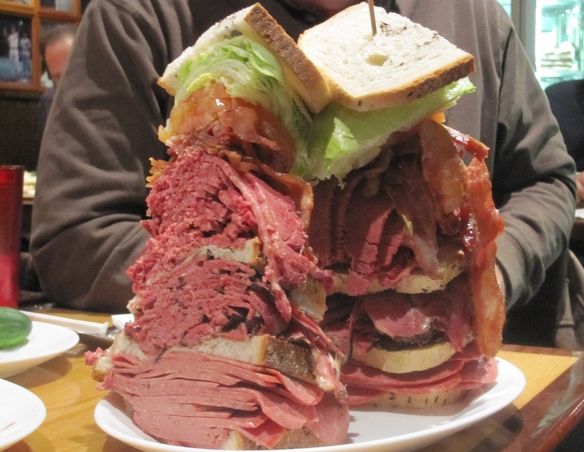
Getting over overwriting

Whattya think? Too much?

It’s a bad habit of mine, definitely happens in the first draft, and then has to be slowly and surgically removed with each successive draft that follows.

Simply put, I put too much detail into a scene. I visualize in my mind how it plays out, and that’s what I put on the page.

There’s nothing wrong with it. It’s probably my equivalent of a “vomit draft”, where everything gets written down because you know you’re going to go back and edit and rewrite it multiple times. It’s a starting point.

So after you’ve got that first draft written, how do you know what to get rid of?

Like with sculpting a statue out of a block of marble, just chip away anything that doesn’t belong.

Say you have a scene that runs 1 3/4 pages. Do you know what the point of the scene is? Does it advance the plot and the characters’ development? Is there a way to have the scene still do that but with significantly less words? Can you cut the whole thing in half? Can you cut it by 75 percent?

How much of the scene is just back-and-forth dialogue? How detailed are you when it comes to what the characters are doing? (“He climbs the first step of the stairs, pauses to catch his breath, wipes his sweaty brow, then advances another step.” That sort of thing).

Do you describe parts of the scene that, when you really think about it, really don’t have much or anything to do with moving the story forward (how a room is decorated, what the characters are wearing, etc)? I’ve been reading a lot of scripts lately, and have seen all of these on display.

It’s like this is the culmination of three important screenwriting rules:

get in late, get out early
get to the point as soon as possible
write as if ink costs a thousand dollars an ounce

Don’t be of the mindset that you can’t or won’t change anything. Yes, this is your baby, but what’s more important? Your writer’s ego or telling your story in the best, most efficient way possible?

I had a first draft that was 132 pages. Just about every person who gave me notes said it was too long, and that it had to be at least 20-30 pages shorter. At the time, I thought that was asking too much. If I really pushed myself, I could cut maybe 10, 15 tops.

But as I went through each rewrite, trimming wherever I could, savagely wiping scenes, characters and dialogue from existence, it kept getting shorter until I got it down to 107. A whole 25 pages cut, just as was suggested. It took a while, but I got there.

Whittling each scene down to its bare essentials not only helped make the script better, but also proved beneficial to developing my writing and editing skills so while I’m sure I’ll continue to overwrite in the future, at least I’ll be better prepared to deal with it.

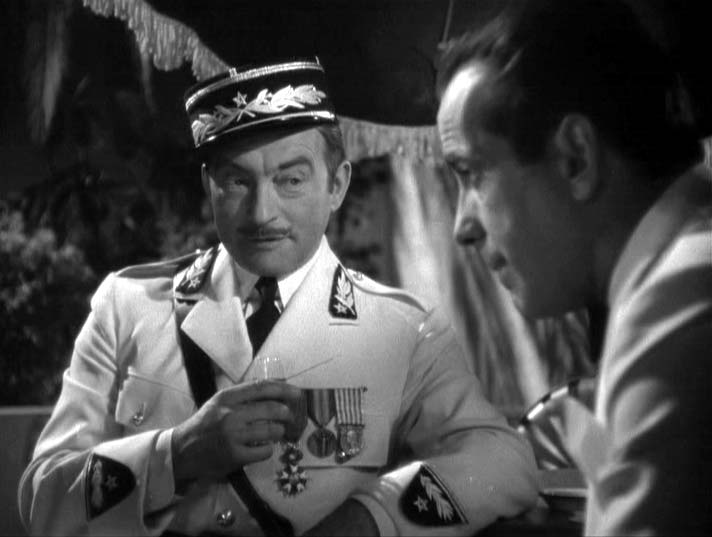
Like coming to Casablanca for the waters, I was misinformed

You and I are kindred spirits, Mr. Blaine
Kindred spirits you and I, Mr. Blaine

I really, really, REALLY do not like making mistakes, especially when it comes to things related/connected to screenwriting, and even more so when it comes to trying to get a career going.

This time around, it’s regarding query letters. Even though a majority are now done via email, for the sake of the discussion, they’ll still be referred to as ‘letters’.

Query letters are a tricky beast. Getting them just right takes an inordinate amount of effort. Some might even say just as much as goes into your script.

I actually don’t mind researching appropriate recipients, or spending the time crafting the letter (which also includes getting feedback on it from those who know more about it than I – a hearty thanks to those who’ve offered their invaluable insight & suggestions!).

What really gets my goat is when I learn, usually after the fact, that I’ve done something that can only be classified as straight-up stupid, or at least counterproductive.

And it all stems from one small, seemingly insignificant thing: what goes in the subject line.

Turns out – not so insignificant. The subject line is your one shot to grab their interest and get them to keep reading. But what should it be? There are several schools of thought about this, but more on that in a second.

I couldn’t tell you where I read it, but the advice (from an “expert”, mind you) I’d heard recommended listing the title, followed by the word ‘query’.

Wrong. Wrong! WRONG!

Apparently including the ‘q’-word is just one big kiss of death. It screams out “Amateur!” and pretty much guarantees your email will probably be deleted without even being read.

So don’t do it! Avoid at all costs!

What should you use? As stated above, several options.

-Just the title

-Title and genre

-A noteworthy contest award (e.g. “2015 Nicholl semifinalist”)

-The hook of your story. Keep it brief!

-“THIS meets THAT” (Opinions are mixed on this. Some writers have said they use it, but a few consultants say not to.)

-Referred by _____

The floor is open to other suggestions.

As for me, lesson learned as I gear up to re-send all those emails in the coming weeks. A weighty project, but whatever it takes. I’m leaning towards just the title or the hook.

Just another project status update…

All the news about me that's fit to digitally publish
All the news about me that’s fit to digitally publish

Having recently given some notes on a couple of comedy scripts, I decided to see what I could do with mine, which I hadn’t looked at in about 5 months (due to finishing up the western).

The outline still seemed pretty solid, but could do with some minor tweaking. I’d already started on a first draft, so I thought I’d see how that read.

I honestly didn’t remember how far I’d gotten. Maybe page 25 or thereabouts?

Nope. A whopping 49 pages. Whoa. That’s around halfway through! Talk about pleasant surprises.

I read through and already see what needs to be cut, including too many instances of over-writing (a bad habit of mine that always occurs in first drafts). From what I’ve read, it looks like a lot can be taken out without too much of an impact on scenes or story.

So now I’ll see if I can settle back into that 3-pages-a-day routine and have it finished relatively soon-ish. I was hoping to have a draft of something done by the end of the year, so looks like I may actually be on track for that.

Fingers, as always, remain firmly crossed.

And how’s your current project coming along?

Is your story worth fighting for?

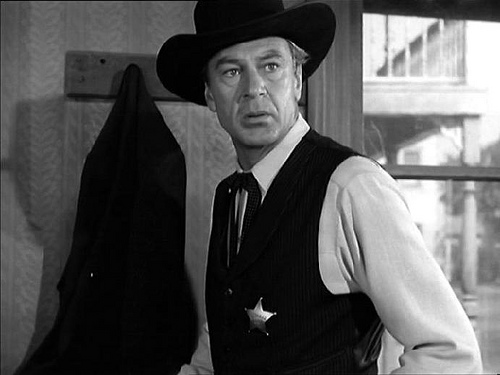
Will Kane knows what it's like to feel like one against everybody else
Follow Will Kane’s example (except without all the shooting and stuff)

The rewrite of my mystery-comedy has been put on hold because I’m teaching myself how to write a mystery, or at least how to be better at writing one. I bought a book and everything.

But I also don’t want to not be writing, so I’ve also decided to return to the low-budget comedy. It’s been a while since I’d read the outline, but it holds up more than I thought. Sure, it needs work and there are some spots where it says something like “SOMETHING FUNNY HAPPENS!,” but overall, I like it (hold onto that statement for just a bit).

Several months ago, I’d had the opportunity to have a brief chat with a writer who specializes in comedy. He asked what I was working on, so I pitched him the idea. He liked the concept, but was quick to poke holes in the story vis-a-vis the logline (which has since been rewritten), and didn’t care for how I had the story play out (as delivered in my thumbnail presentation).

“X should happen instead of Y! Having THIS CHARACTER connect with THAT CHARACTER is all wrong!” Plus some additional words to that effect.

Gosh.

I wasn’t expecting a standing ovation, nor did I expect it to be proclaimed a work of genius, but if this guy didn’t care for what I had, did that mean it was doomed before I even started?

Nope. Quite the contrary.

Several key things I had to remember:

-this was his opinion. One person, which is not a majority.

-his sense of humor and comedy stylings could be totally different from mine.

-it’s a work-in-progress in its very early stages. The end result will most likely be very different from the starting one.

-I think it’s a good story. Always have, always will. I have no intention of abandoning it or making any significant changes so as to gain his approval. I’m not writing this for him.

Every writer spends a lot of time coming up with story ideas, and then developing them as far as they’ll go. Stick to your guns if you believe in your story, but don’t totally block out advice and suggestions. Use what you think works best. Remember – this is YOUR story. If you think it works, then by all means, do what you can to make things happen.

It’s great when you get encouragement, but you’ll also encounter a lot of naysayers (“I don’t get it/like it, so it must be a bad idea.”). It’s all subjective. Everybody likes different things. If you believe wholeheartedly in your story, you have to do your absolute best to get the rest of us to be just as interested in reading it.

Just make sure to tell that story in the most entertaining, original and professional way possible. That’s all.