Change is inevitable. Embrace it.

edited page
All that red is a really good thing

A few more sets of script notes have come in. Comments in general are favorable (Thanks, everybody!), along with lots of suggestions about potential fixes. Nothing too drastic, but just enough to slightly alter things and still achieve the same results. Nevertheless, it’ll require a fair amount of rewriting.

Which is totally fine by me.

As much as I like what I’ve written, as do a lot of my readers, both sides know it can always be improved – especially my side. As the writer, it’s not as easy for me to recognize what those improvements could be and where they should go, which is why I ask for feedback. The readers start with only what’s on the page and use their knowledge and experience to deduce what works and what doesn’t, and then pass it all back to me for analysis and selective implementation.

A less experienced writer might be hesitant or even reluctant to do anything drastic that could change anything about their script.

Me, not so much. I know what the story is, and if somebody points out something that doesn’t work or suggests a different way to present it, I’m not going to say no. In fact, I’d probably be grateful for it. I might not always agree with what somebody says or suggests, but I still appreciate it and can totally see why they said it. Sometimes it might even inspire a totally new approach. Whatever works.

Used to be I would dread having to rewrite, but due to an effort of trying to write on as regular a basis as I can, which also involves rewriting, I’ve gotten to the point where I now actually look forward to it. (Helpful tip – the more you write, the easier it gets – albeit to a certain degree. Overall, it’s still tough.)

Will later drafts of my scripts be exactly the same as the first? Of course not. That’s the whole point of rewriting: to make it better than it was before. And that requires making whatever changes are necessary.

I recently got to sit in on a friend’s script review group where a new writer received some pretty brutal notes about their script (which I believe was also the first draft). If they wanted it to be better, they had a lot of work to do. They had this somewhat annoyed look and said “Guess that means I’ll have to rewrite most of the script.”

Well, yeah. This is no “one-and-done” kind of operation.

If you think the first or second draft of your script is perfect as is and doesn’t need any more work, then good for you, but I sincerely hope you never, ever show it to a writer with more experience because you will be severely disappointed with what they have to say.

As for me, I’ll be keeping busy with the usual hacking, slashing, and overall rehashing of my scripts. And enjoying every second of it.

-If you’re a fan of sci-fi adventure, then please consider contributing to writer/producer Marc Zicree’s crowdfunding project Space Command: Redemption. Among the cast of sci-fi luminaries are Doug Jones (HELLBOY), Robert Picardo (STAR TREK: VOYAGER), Bruce Boxleitner (TRON, BABYLON 5) and Bill Mumy (LOST IN SPACE), Space Command: Redemption is “a bold, new sci-fi adventure with a retro feel and an optimistic view of the future.” Donate if you can!
You make it sound like a bad thing

good deed
That’s the gist of it

In a few conversations with writers and industry-connected folk, I’ve mentioned how I occasionally do script notes for friends and read for contests.

Sometimes I’d get a “That’s really nice of you.”

And once in a while, the person would look puzzled, and ask, with what I presume was in all sincerity, “Why?”

The way they utter that monosyllable carries a strong tone of “Well, that sounds like a genuine waste of time.”

To which I say, “Why not?” I consider myself a nice person, and try to help other writers out when I can.

Too simplistic? Let me elaborate.

I like reading other people’s stuff. In the case of doing notes, I’m either asked, or it’s reciprocal for them having given me notes on my scripts. That’s the least I can do.

(It should also be pointed out that a few cookies-for-notes transactions have taken place, with both parties being quite satisfied with the results.)

With a lot of the material I read being from experienced writers who know what they’re doing, the scripts are often quite solid from both craft and storytelling perspectives. This in turn helps me hone my analytical skills, which I can then apply to my scripts. Or at least attempt to.

Plus, screenwriters should always be reading scripts.

Regarding the contests, I’ve entered enough of them over the years with the hope I get a quality reader or readers, so I see this as a kind of giving back. It’s very time and labor-intensive, and I’ve had to endure more than my fair share of poor-to-horribly-written scripts. On the other hand, every once in a while you find a true rose among thorns.

I’m just trying to offer up the kind of help I could have benefitted from when I was still learning the basics. And even today, having made some progress on all fronts, I still seek out, as well as offer up when asked, advice and guidance. So far, no complaints.

I’ve never claimed to be an expert, but I do what I can. If that means setting aside some time to read something and offer up my two cents, so be it.

And I don’t see anything wrong with that.

A quick refresher course

library
Researching potential connections takes just as much effort

I’ve noticed a trend recently popping up on a few online screenwriting forums.

Writers are posting their material, asking for feedback. Concepts, loglines, the first page or the first few pages of their script. Any and all of them.

On one hand, I can understand the desire to get feedback. You want to know if what you’ve got works, and if it doesn’t, how it could be improved.

On the other hand, you’re asking what is, for the most part, an assortment of total strangers with unknown levels of experience to tell you what they think. Can’t say that I’m too crazy about that.

It’s like walking into a party where you don’t know anybody, standing in the middle of the room and shouting “Hey! What do you think?”

Don’t do that.

As has been stated many times on these pages – networking is key.

Professional relationships are a vital part of this business. They take time and effort to establish and maintain, but are definitely worth it in the long run.

You need to put yourself out there and get to know other writers, preferably in person, but online/virtually works just as well. Both have benefitted me greatly, and could do the same for you.

Here are a few previous posts which might come in handy.

Getting to know you

Try the direct approach

Lattes, lunches & kindred spirits

Hey! Long time no (preferred form of communication)

Now get out there and meet people.

-Two weeks ago, I ran the SoFi Golden Gate Half-marathon with a time of 2:01:16. Not bad, especially considering the amount of uphill.

This Sunday I’ll be across the Bay and running the Berkeley Half-marathon for the first time (it’s also my 5th and final race for this year). The course is a little flatter than San Francisco, so while coming in under 1:55 would be great, I’ll also be happy with anything under 2 hours.

Once again proving that the journey to succeed really is a (half) marathon, not a sprint.

See you at the finish line.

A subject worth discussing

soapbox
Listen up, and listen good

Stepping onto my proverbial soapbox to utter a few thoughts on something that needs to be said.

If you’re part of an online forum, and you post your material in that forum seeking feedback from other members, you will get all kinds of responses. Some will be positive, and some will be negative – maybe to point of being outright condescending.

How do you respond to the positive ones?

“Thanks. I appreciate it.” Maybe elaborate a little, or a follow-up question or two. Possibly even ask to communicate with the person in private.

The negative and/or condescending ones?

“Thanks.”

That’s it. No matter how much you feel the urge to respond with a stinging retort written in ALL CAPS and a lot of exclamation points, just don’t. You asked for comments and you got ’em.

A thick skin is a necessity in this business. Arguing or getting angry because you don’t like what somebody said won’t help you or your writing, and it makes you look petty and unprofessional.

Now let’s address the other side.

Somebody asks you for notes, and based on the quality of the material, you do the best you can, trying to be as helpful as possible. Be honest with your suggestions of what needs to be fixed.

Does it have potential? Mention that. Are there problems? Identify them and how they could be fixed.

If the writing reflects an amateur, or a poorly constructed idea, point out how and why in a constructive manner. There’s no need to be insulting or talk down to them. Chances are they’re still learning, so they don’t know as much as you do.

They may not like what you have to say, maybe even going so far as to insult you and your experience, or deride your comments. But that’s on them. You’ve done your part.

So let’s review.

You want help? Take what you get, even if you don’t like it. After your temper cools down, take a serious look at what was said. There may be something in there worth using.

Somebody asks you for help? Be professional and as helpful as you can. Don’t hold their lack of experience against them.

No matter whether you’re giving or receiving, be patient, tolerant, and open-minded.

Keep that in mind, okay?

Thanks. The soapbox is now available.

One opinion is not general consensus

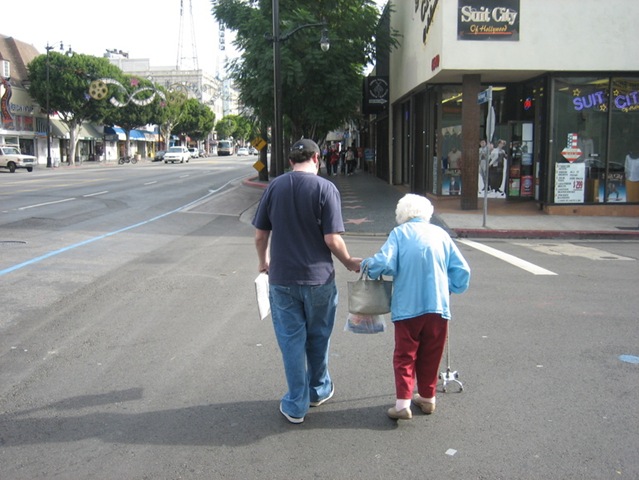
sidewalk
Everybody’s got something to say

Feedback on a script. You know you need it.

But here’s the thing: everybody will give you their thoughts on your script. They’ll tell you what works for them and what doesn’t. However, it’s more than likely their view is going to be different than yours.

That doesn’t necessarily mean they’re right and you’re wrong. It’s what they think, and you can take it or leave it.

When I was starting out, I figured the person giving me notes was more experienced than I was (why else would I ask them for notes?), so they must have known better, so I’d implement their suggestions without hesitation.

The result – my scripts were getting away from what I wanted them to be and becoming more of the other person’s.

Which is the total opposite result I wanted.

Only after constantly working and studying and rewriting did I get to the point where I’ll now get notes and have no qualms thinking “You make a good point, but I don’t agree with that.”

Sometimes a note will be the total opposite of what others say, which makes me take a closer look at it. I may still disagree with it, but it’ll make me think.

I’ve been on the giving end of that too; I give somebody notes, and am occasionally told “You’re the only one who said that.”

You can get notes until it seems like you’re heard from every single writer on your list of contacts, and no matter what any of them say you should or shouldn’t do, you’re the one driving this bus.

You are the one – the ONLY one – who knows what’s best for your script.