Here’s to our biggest fans

Couldn't do this without you
Couldn’t do this without you

Even though writing is primarily a solitary activity, there are often times when we just can’t go it alone.

Friends and trusted colleagues can only take us so far. The rest of the time we need somebody else.

But not just any somebody. Somebody extra special.

Somebody who’s there for us no matter what.

Somebody experiencing the ups and downs right along with us. Somebody who shares in our joys and frustrations.

Maybe they’re a writer too, but chances are probably not, but it doesn’t matter. They know what it is we’re trying to accomplish, and how tough it is, and offer whatever support they can.

They’re there for us in countless capacities. A sounding board for potential ideas. The editor or proofreader who sees our work before anybody else. The gatekeeper of our writing sanctums.

They provide encouragement when we’re feeling low. They sympathize when we suffer from writer’s block. They are the ones we look to for solace when the long-awaited answer is ‘no’.

But they’re also the first person you want to tell when something good happens.

They are our support, our motivation, our inspiration. They help us to move forward, keep trying and carry on.

So pass along your gratitude to your someone. Let them know how much you appreciate everything they’ve done to help you and your writing.

This is a tough enough journey as it is, and without them, it would be much, much harder.

Stepping into the arena

That's one way to eliminate the competition (no pun intended)
That’s one way to eliminate the competition (insert rimshot here)

If your inbox is anything like mine, chances are you’ve been getting a lot of emails lately touting the pending deadline of more than a few contests.

For the most part, I usually ignore them. Maybe the Nicholl if I have a script ready, but rarely any others, if any at all.

But a little more confidence in my abilities and encouragement from other writers is making me gradually change my mind.

I’m seriously considering biting the bullet and submitting a script, warts and all, to a few competitions over the next few months.

It’s one of those things every screenwriter should do at least once or twice.

But which ones? There are a lot to choose from, ranging from the obscure to the high-profile.  While there’s nothing wrong with the Brand X Screenwriting Competition, you have to admit it doesn’t carry the same cachet as being a finalist in Austin, PAGE or TrackingB.

Everybody has different criteria for what they’re looking to get out of a particular contest. While a cash prize is nice, most are seen as stepping stones to making industry connections and getting representation.

Some offer script notes – a handful do it for free, but almost all charge extra for it. It’s not something I’d do, but that’s me.

If you’ve decided this is the year you take the plunge, then do your homework and research the ones you’re interested in to find out they have to offer. What kind of reputation do they have? How was the experience for previous entrants and winners? Do the prizes justify the amount of the fee?

No matter which ones you decide on, keep in mind you are going up against a lot of other writers just as eager and ambitious as you. Do you think your script is ready to take them on? Like, REALLY ready?

Even if you have a tiny amount of uncertainty, how much time is there between now and the deadline? Use this to your advantage and give your script an extremely thorough read-through (or two) and fix what needs to be fixed. Nobody likes finding a typo after the fact.

Do whatever you can to make your script ready to go, cross your fingers when you hit ‘submit’ and hope for the best.  How long you wait until getting back to your current project is up to you.

Good luck.

What it’s about, not what happens

bttf theme

A usual part of my daily routine is helping V with her homework. This week, they’re learning about how to identify the theme of a story.

Nothing like starting with the basics.

After reading the one-page story together, I asked her what she thought the theme was. Her response was more focused on one part of the story, rather than the whole thing, so I tried another approach.

“What’s the message of the story? What is it trying to teach us?”

That made things clearer to her, which made finding the theme of the next day’s story a little easier (with a little guidance from me).

This of course made me think about finding, or at least knowing, the theme of the story of your script.

Some writers start writing and figure out the theme later. I’m the total opposite of that. I don’t think I could even start on the outline if I didn’t at least have an idea of what the theme was.

A lot of the time it’s just a single word or a short phrase, but it still plays a key part in putting my story together.

Knowing the theme of your story is vital; it influences how the story’s told and what it’s about. If you don’t know what your story’s really about, how can you put the rest of it together? That would be like doing a jigsaw puzzle without knowing what the final picture is.

A great example of a theme on display is BACK TO THE FUTURE. Look at the dialogue exchange in the picture up top, which takes place just a few minutes in. Jump forward to Act Two, where, after all the setup in Act One, we get to see how history does indeed change, all thanks to Marty. (Just another reason why this is a phenomenally bulletproof script)

So as you work on your latest draft, take a look at each scene, even if it’s just a few lines long. Does it advance the story, the characters and the theme?

If so, great and keep up the good work. If not, take a moment to figure out what could be changed so it does.

Once you learn how to do this, hopefully your writing process will be just a little bit easier.

Slightly easier (but I still don’t like it)

Takes a while to really get it right

After a great discussion of his notes for the western spec, my manager’s script guy said those words I have always and will probably continue to dread.

“All we need now is your logline and one-pager.”

Ugh.

You know that feeling of loathing when there’s something you really don’t want to do, but know that you absolutely have to? That’s exactly how I felt, and from what I understand, I’m not alone in this.

But like I said, it had to be done.

First up was the logline. I’d already spent a lot of time working on this, so most of the heavy lifting was out of the way. Turns out it just needed a little tightening up, so yay on that front.

Which brings us to the one-page synopsis.

Double ugh.  Calling it the bane of my existence is a little harsh. More like a necessary evil.

Using what I did last year for DREAMSHIP as a model, I opted to put it together like a slightly extended version of what you would read on the back of a paperback novel.

A quick overview-setup establishing the major character and main storyline, then some hints/teasers at what comes after things really get started, followed by a sort of cliffhanger about the ending.

As was explained to me, to convert the potentially-interested into the definitely-interested, the synopsis has to really capture the tone of your script and not focus as much on what happens. The more concise and descriptive you can be regarding what the story’s about rather than the story itself, the better. Go into too much detail and you’ve lost their interest.

It took a few attempts, but in the end I had what I consider to be a pretty strong synopsis. There will most likely have to be some rewrites, but that’s okay. The hard part’s done.

In the meantime, it’s back to the mystery spec rewrite. Rest assured that as I work my way through the second half, my always-reliable subconscious will keep reminding me of one absolute truth:

“You know you’re going to have to write a one-pager for this one too, right?”

Triple ugh.

What’s wrong with PG-13?

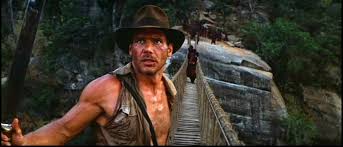
One of the two movies which resulted in the creation of this rating

In recent discussions with other writers, I’d be asked what I was currently working on. I’d mention the western and mystery specs, and give a thumbnail description for each.

Among the responses I’ve come to expect is usually the follow-up question:  “Who’s your target audience for that?”

Everybody.

While what I write would probably be too much for very small children, there’s no reason it couldn’t be enjoyed by anyone between 8 and 108, as the saying goes.

In addition to all the usual criteria, I want to make sure the story is interesting enough so it would appeal to a wide spectrum of viewers, as well as keeping the content dead-center on that fine line between “not enough” and “too much.”

One writer sent back his notes on the western. He had some very good comments, but some of them seemed to be through a DJANGO UNCHAINED filter (which he also admitted being influenced by). It was suggested I go for a more intense level of violence in some scenes.

Which would be fine if I were writing something that was a hard ‘R’, but this isn’t.

I’m just more of the family-friendly sort, and there’s absolutely nothing wrong with doing that kind of material. (FROZEN has earned $350.7 million so far. Not too shabby, with the sing-along version ready to be unleashed.)

Although I want my stories to be fun and exciting, it’s also important to me they respect the audience’s intelligence, no matter what age they are, while also being fairly easy to follow.

I appreciate it when a movie does that, and hope to keep the practice going.