Working well within my wheelhouse

Hang on. This is going to be quite a ride.

Hard as this may be to believe, but I’m actually surprised at my progress with the outline for the pulpy adventure spec.

It’s coming along much faster than I expected, and the more I work on it, the more I see things that can be tweaked/adjusted/modified so as to improve on the overall story. I’m definitely not saying it’s easy; just easier than it used to be.

Having previous drafts to work with has been a significant plus, and once I fully embraced the notion of “anything can change”, it just took off from there.

But the biggest boon to this whole thing has simply been the pure enjoyment of working on it.

I don’t make any attempt to hide my love and appreciation of the pulp style of writing, so when I work on these kinds of stories, I make a sincere effort to really put it on the page.

The swashbuckling-ness of the fantasy. The rootin’-tootin’-ness of the western. And now the spectacle and wonder of science fiction.

I really do live for this stuff. One of my mantras since the beginning has been “Write something I would want to see,” and all of these definitely fall into that category.

Some may argue that writing material like this is counter-productive to getting a career going. “Nobody’s going to take a chance on something like this from an unknown writer!”, that sort of thing. If all I end up getting out of this is a solid writing sample, that’s fine by me.

Is it wrong to think somebody could read it and say “There’s no way I could get this made, but I really like the writing. Would you be open to working on ____?”? Hopefully not.

I’m taking my time with this, and in no rush to finish. All the work I’ve done on previous scripts is paying off in terms of knowing what to do, figuring stuff out and making the story (and the eventual script) better.

I’ve said it many times before: I am having an absolute blast writing this story, and hopefully those who read the end result will too.

Ask a Million-Dollar* Script Consultant!

chris soth

*this number represents the estimated value of Mr. Soth’s advice, rather than the actual cost.

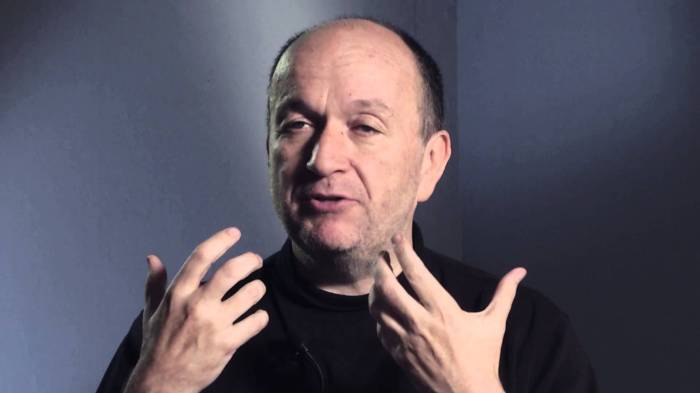
The latest in a series of interviews with script readers and consultants who would be worth your while to work with if you want to get your script in shape. Today’s spotlight is on writer-producer-script advisor Chris Soth of ScreenplayMentor.com.

Writer/Director-Producer Chris Soth has authored over 40 screenplays and is a frequent speaker on the topics of story structure and independent filmmaking, teaching screenwriters around the world how to write great screenplays AND pitch them for success. Chris is the writer of Firestorm, released by 20th Century Fox, and the independent hit Outrage: Born in Terror. He is currently developing a slate of independent films, the first of which, Don’t Fall Asleep, has just received distribution. His directorial debut SafeWord is presently in post-production. Chris has taught at USC and UCLA, and currently guides screenwriters from concept to FADE OUT using the “Mini-Movie Method” in his mentorship program at ScreenplayMentor.com. His ebook “Million-Dollar Screenwriting: The Mini-Movie Method” and DVD “SOLD! How I Set Up Three Pitches in Hollywood,” among other great screenwriting resources, are available at ScreenplayMentor.com.

1. What’s the last thing you read/watched that you thought was incredibly well-written?

Sustaining a story for an hour or more with brilliant writing at every turn is so difficult I find myself attracted to the short form, even w/my own writing these days. That, said, we ARE in a Golden Age of Television now, with some creators getting to not only decide a story that will take five or more years to tell and lay it out beforehand — occasionally with guarantees that all the episodes will air — and not only control a very complex and novelistic story, BUT also control the rate at which it’s consumed. No artist has ever had that before, even novelists…Tolstoy could be sure reading War and Peace would take you while, but not throttle your reading speed to piecemeal over 5-8 years, the way Weiner or Gilligan have. I really appreciated how all the Mad Men were…going mad. How all of them were continually pitching a product, themselves, and none more than Dick Whitman, whose greatest pitch was Don Draper…and living in that gap between the presentation of your self and the reality, or worse, what you FEAR you are…is the madness. I think if you’re in show business, you get that. So, as I said above, hard to sustain for an hour, let alone all those years, but some amazing brilliance every single episode.

Here’s one favorite in the episode from the penultimate (full) season, where all of Sterling Cooper’s taken acid and a Hippie Flower Child puts a stethoscope to Don’s chest to listen to his heart.

HIPPIE FLOWER CHILD
Let me listen to your heart…(re: stethoscope)…it’s broken.

DON
(re: his heart) You can HEAR that…?

How long has that double entendre been staring us in the face, and how GOOD are these writers to keep giving us insight into their brilliant central character even that late in the game? He’s broken-hearted. He hides it. He always will be. A tiny thing, but the last time I remember really thinking “Wow, good writing!”.

2. How’d you get your start reading scripts?

My first idea was to teach a seminar in my own screenwriting structure technique, “The-Mini-Movie Method”. I did that, and also offer the resulting videos and audio course. I found a real thirst after that for hands-on expert consulting developing screenplays with expert advice on this method. I don’t really do a classic “reading”, or that’s rare anyway. I consult and help writers build scripts, usually from FADE IN. I will work with clients thru my website ScreenplayMentor.com with works-in-progress. My usual procedure, whether starting fresh, or jumping in partway, is to outline a vision for the next draft and mentor and guide it, page by page (Mini-Movie by Mini-Movie) until Fade Out…then I’ll read the resulting, and much stronger, screenplay thereafter. I started my side business after some success as a writer myself, because I really like to work everyday, but like different work and different stories and continually changing ideas. Also, the steady work and income that my consulting provides lets a guy with a daughter in college sleep at night even between studio writing assignments.

3. Is recognizing good writing something you think can be taught or learned?

I absolutely think so. There are certainly rules, best practices, etc. Some so oft-repeated they become cliches: “Show, don’t tell”, etc. But developing an aesthetic for what good writing and what good storytelling is, should be vital to each and every writer. We all want to make THE BEST MOVIE EVER, right? Well, if we have no yardstick for measuring quality, how will we do that?

4. What are the components of a good script?

The list goes on and on. Most important and first: TENSION. A hope and fear for a viewer/read to root for and root against. So I’ll use this as another opportunity to say it: TENSION, specifically TENSION REDUCTION is the source of ALL pleasure we take in drama and in story. A good story will continually build tension, every beat, every scene, every sequence and release that tension in an explosive and gratifying climax…make sure YOURS does. I’ll leave it there.

5. What are some of the most common mistakes you see?

The lack of tension, of course. Unnecessary scenes, which I define above as scenes that don’t build or add to tension. It seems common to the point of epidemic that first acts run 45 pages in early drafts, and writers are often still setting up dominos as they break into the third act…dominoes that should have been set up WELL before, often in act one and should be falling with dramatic cataclysm and knocking over BIGGER dominoes now… A lacking “narrative drive” that makes each story event seem, in retrospect, inevitable, not arbitrary. It seems like many early drafts are written just to fill pages, but there IS a perfect twist for the end, the midpoint, the first act, that is dictated by the concept or idea…

6. What story tropes are you just tired of seeing?

References to other movies or TV shows. You have to be very clever and original to do this well, and it fails most of the time, Quentin Tarantino aside, and even HE blows it a lot of the time.

7. What are the 3 most important rules every writer should know?

-TENSION = Hope versus Fear  (T = H v. F is the E = MC squared of story) After that, I’ve never thought what might come second, let alone third, but I’ll put a few down here.

-Don’t get it write, get it written. The worst thing you write is better than the best thing you didn’t.

-Craft character to story and story to character by asking, over and over: Who’s THE WORST person for these events to happen to, and What’s THE WORST thing that could happen to THIS person?

8. Have you ever read a script that was an absolute, without-a-doubt “recommend”? If so, could you give the logline?

I don’t do a classic read, nor grade on that studio scale, nor should I probably divulge the scripts of my clients here, but MANY come to mind. I read a screenplay every day my first year at USC and the ones that really stood out are THE PRINCESS BRIDE and FIELD OF DREAMS. Both made me cry more than the movies made from them had, the first because it does actually exceed the movie in the sheer beauty of the writing, I like the movie fine, tho’ I’m not in the cult, but the SCRIPT…oh, that script…the second perhaps more for memories of seeing the movie itself.

9. How do you feel about screenwriting contests? Worth it or not?

I never had any luck with them. But I think they’re a real tool for getting your work read and getting exposure these days.

10. How can people get in touch with you to find out more about the services you provide?

Everyone’s welcome to contact me at chrissoth@aol.com, chrissoth@gmail.com or look at ScreenplayMentor.com

11. Readers of this blog are more than familiar with my love/appreciation of pie. What’s your favorite kind?

Easiest question. My mom’s chocolate chess pie. I grew up eating this at Thanksgiving instead of pumpkin pie and had to learn to make it myself when I struck out on my own. I’ll have it all through the holidays and Mom still makes it for us when we come home. I’ve only found one restaurant that serves it, but just developed a lead on another in Los Angeles, so stay tuned…
Works for me

Got my own way of doing things
Just doin’ my own thang

Over the past few months, I’ve made a sincere effort to expand my network of writers, filmmakers and industry folks. I can honestly say it’s been a lot of fun and I’ve had the benefit of connecting with a lot of fantastic people, both online and in person. Added bonus –  my self-confidence has shot through the roof.

Trust me. I’m phenomenal.

See?

This really comes in handy especially when I’ll read about someone else’s career taking a huge step forward (sale, option, deal, etc.). It stings at first, but then I remind myself that the only thing that person and I have in common is that we’re both writers. Their path and mine have been totally different and will continue to be so.

My turn’s coming, and I’m plenty experienced at being patient. You have to be in this business.

It doesn’t me do any good to compare myself to others. How I write, what I write, what I say to people, and so on. I’ve got my own totally unique approach to all of it. It’s taken a while to get to this point, and I like how it’s going, not to mention where it’s headed.

In the meantime, I keep writing (putting the comedy on hold to revamp the outline for the pulpy adventure, with ambitious plans for the finished product), reaching out to more people (great face-to-face meetings this week with a local actor and a writer) and continue the striving towards the ultimate goal.

Ask an Astonishingly Productive Script Consultant!

Bill Boyle

The latest in a series of interviews with script readers and consultants who would be worth your while to work with if you want to get your script in shape. Today’s spotlight is on writer-educator-consultant Bill Boyle of www.billboyle.net.

*editor’s note – Bill passed away in July 2018

Veteran screenwriter Bill Boyle has been involved in the film industry in both Canada and the U.S. for over 25 years as a writer, director, agent, producer, story editor, and mentor. Mr. Boyle has the rare honor that every screenplay and television series he has written has been produced or optioned. He currently has four screenplays produced and a fifth scheduled for production. Two others are presently under option. Additional information on the films can be found at www.billboyle.net or at www.imdb.com

In addition to screenwriting, Mr. Boyle devotes a significant amount of his time sharing his experience mentoring younger screenwriters. He teaches screenwriting at UCLA and has lectured throughout Canada and the United States.

Mr. Boyle is one of the most popular script consultants in the industry. He has consulted on over 1,000 screenplays worldwide. Creative Screenwriting Magazine rated him among the top 10% of screenwriting consultants. He is the lead proponent of a visual style of screenwriting called “The Visual Mindscape of Screenplay” that focuses on the visual and visceral aspects of screenwriting. His book of the same name was released in 2012.

1. What’s the last thing you read/watched that you thought was incredibly well written?

I am a huge fan of Jo Nesbo’s novels. His visual exploration of the environments he creates are so visceral that once read it is impossible to ever forget them. As for screenplays, I recently read Nightcrawler and found it exceptionally well-written.

2. How’d you get your start reading scripts?

If you mean reading scripts as a job, I was never actually a script reader. I was a manager in Canada and read many scripts that my actors were up for, as well as reading the work of my own screenwriters and playwright clients.

3. Is recognizing good writing something you think can be taught or learned?

It needs to be taught, but not taught as in learned; taught as in establishing the ability to connect fully with the writing and to remain focused. That ability and willingness to be fully immersed in the screenplay allows the reader the conduit into the rhythm, pacing and flow of the narrative. Sounds obvious, but it is my experience that the vast majority of writers ‘skim write’, which is to say they focus all of their attention on what they want the scene to say and little on the atmosphere and pacing of their scenes.

4. What are the components of a good script?

A good script is one that captures the visual and visceral imaginations of the reader. Actually, it’s a misnomer to say we’re writing for the reader, when actually we’re writing for the viewer within the writer. Besides being a visual expression of the story, a good script also expresses the proper pacing and atmosphere within each scene. These are the two elements most often missing in a screenplay.

5. What are some of the most common mistakes you see?

-Detailed Action

-Skim writing

-Blueprint Narrative lacking pace, atmosphere and visual expression

-Overwritten dialogue that lacks a pulse.

6. What story tropes are you just tired of seeing?

The two things that disturb me the most are how fundamentalist screenplay instructors and gurus have poisoned the creative minds of so many young writers.  This attitude of “my way or the highway”, or the ever-growing list of things a screenwriter must not do (Voiceovers, Camera Angles and Directions, Character Descriptives, Flashbacks, etc) is absurd.

For me the big one is the white on the page dictum. Of course, part of the art of screenwriting is the ability to tell the story in a succinct, near-haiku style. This form of brevity allows the story to flow and remain in the Absolute Present Tense. But this should never go beyond the point where it strips the narrative of its creative purpose.

I actually believe that white on the page is a way of devaluing the writer’s role in the filmmaking process. I seriously question when and why white on the page become more important that what is on the page.

7. What are the 3 most important rules every writer should know?

-Screenwriting is first and foremost a visual expression. Whether you choose to ignore it or not there is always and image on the screen.

-Establish pacing and atmosphere in your scenes so as to create a visceral experience within the reader/viewer

-Every action, element and scene of a screenplay exists in the Absolute Present Tense

8. Have you ever read a script that was an absolute, without-a-doubt “recommend”? If so, could you give the logline?

A script by Canadian screenwriter Laura Beard called ‘A Quiet and Distinguished Gentleman’. It was about a French Catholic detective who must overcome the bigotry of an English Protestant city and police force to solve a brutal axe murder in 1930. There are things she does with that script that to this day I still use in my lectures. A brilliant and very clever piece of work.

9. How do you feel about screenwriting contests? Worth it or not?

I am not a fan of screenwriting contests. Before I explain why, let me make the distinction between contests and fellowships. I think the fellowships (Nicholl, Praxis, Disney, etc.) are excellent programs.

I swear to god I have never heard a ‘true’ story of someone having a script produced based on a contest, which, considering how many there are out there, is rather shocking.

This idea of letting the writers know that they have moved to the next tier and then the quarterfinals, semifinals, etc., is their rendition of Three Card Monte. They let you think you win for a while so that you come back for more. What other reason is there?

10. How can people get in touch with you to find out more about the services you provide?

Check out my web site www.billboyle.net. You can also sign up for my newsletter, blog notices, online course dates and when spaces open up for my Unlimited Script Mentoring Program.

11. Readers of this blog are more than familiar with my love/appreciation of pie. What’s your favorite kind?

I will go for pretty much anything except the pie in The Help.

My 52 hours in the Southland

Just like being there!
This is exactly what it looks like!

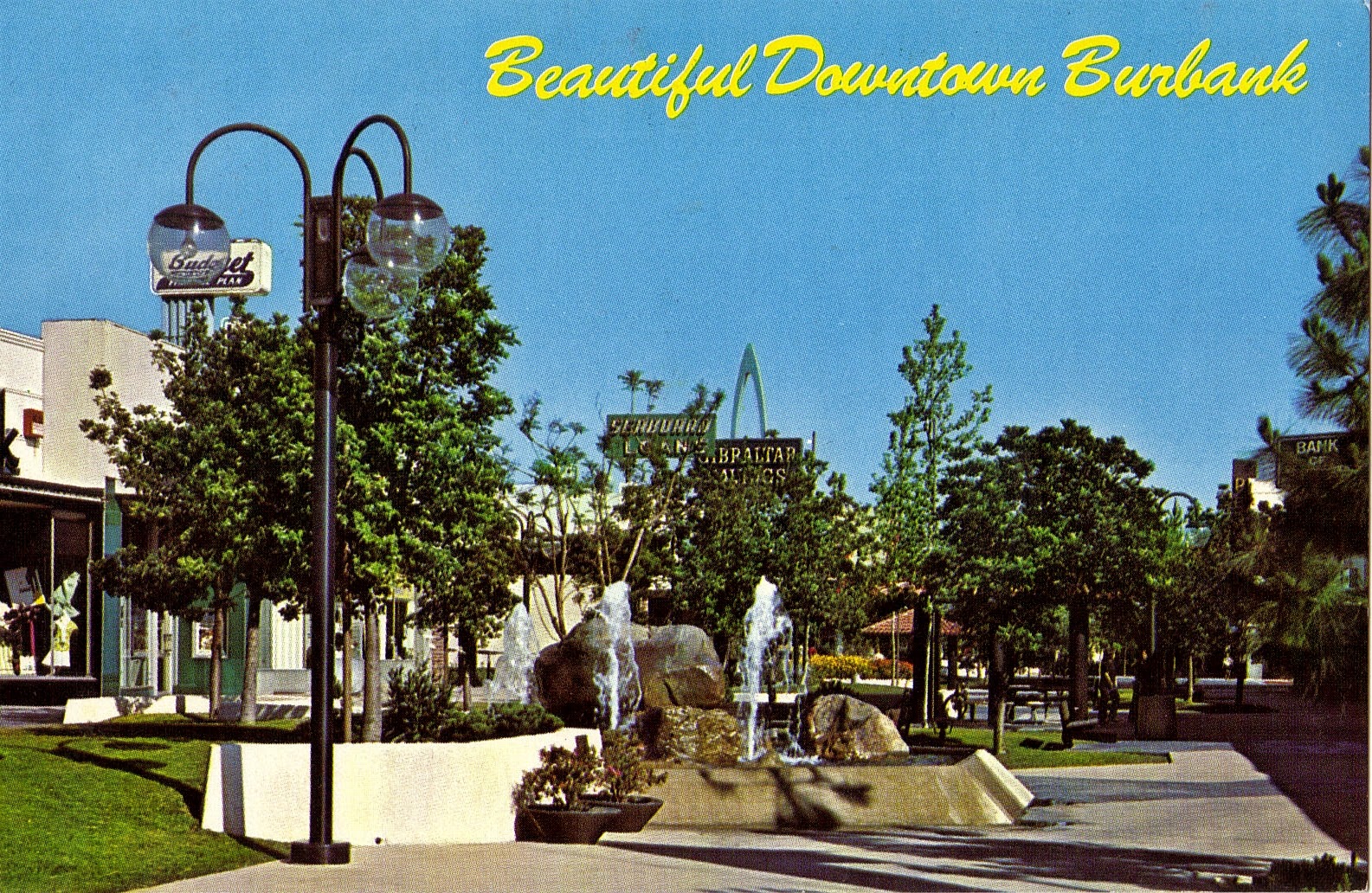
As all you phenomenal readers/followers out there may be aware, I was in Burbank last weekend for the Great American Pitch Fest.

Simply put, attending was one of the best screenwriting-oriented decisions I’ve ever made. I’ll get to the vaguely specific details about that in just a moment, but first, allow me to go over some of the supporting topics, starting with…

Networking

I came armed with a new batch of business cards and the attitude of “Dammit, I’m gonna meet people!”

And I did. At the Friday night mixer. At the numerous classes/panels/workshops on Saturday. Even just stopping to introduce myself to folks sitting around a table in the hotel lobby.

Many are first-timers, nervous at attending one of these kinds of events. Certain that everybody else is a seasoned pro just brimming with confidence, whereas you’re feeling hesitant to even open your mouth and say something.

You know what? Almost everybody feels that way and is a little nervous on some level. Sure, others are a little more extroverted than some, but as I can personally attest, it’s a lot more fun when you get to know people. Besides, why pass up the opportunity to expand your personal network? That writer you just met from halfway across the country could turn out to be a vital asset somewhere down the line.

On a more personal note, I have to mention that the weekend was also a golden opportunity for me to actually meet several of my “Ask a Script Consultant!” interview subjects, including Pilar, Lee, JG, Signe, Tracee, and Steve. The interactions weren’t long, but each proved to be just as charming in person as they are in print.

Pitching

The whole point of the weekend, and why I was here. First, the prep.

As I mentioned, there were panels aplenty where a lot of advice was given out (and sometimes contradicting something else you just heard). I had the benefit of having signed up for the pitch boot camp, where you and another writer would give your pitch, then exchange suggestions on how to potentially improve it.

I polished and honed the pitch for my western over the course of about six or seven run-throughs to the point where I had it down perfectly, then used that as a template for the fantasy-adventure.

As intimidating as doing this is, it all comes down to you being comfortable while having a pleasant conversation with somebody else about your story. The objective is to get them so interested that they really want to read your script. It’s not easy. Listening to other pitches, some writers would give vague story details, while others might go into too much detail.

As was pointed out, you’re also pitching yourself. You’re showing that you’re passionate about the work, hopefully have a pleasant personality, and are someone people would enjoy working with.

Now, a rundown of the results from the actual pitches:

(side note – As I would sit down with each person/pair, I’d ask how they were doing/how their day was going/etc. I’d rather start things off pleasantly rather than just launch straight into the pitch. Everybody was in good spirits throughout the day and seemed to be enjoying themselves. Many added that the quality of the material being pitched was very impressive.)

-13 total (although it felt like more)

-Two said “Thanks, but it’s not for us”

-The rest asked for a one-pager. More than a few asked “What else have you got?” (followed by handing over the other one-pager)

-Just about everybody said, “Wow! That was a great pitch!”

-One script request

-Two asked for follow-up emails

-“This sounds perfect for us!”

-“This is exactly what MAJOR PRODCO is looking for!”

-“We have to continue this conversation offline. Here’s our card. Call us.”

To say confidence levels were running high at the end of the day would be an understatement.

Epilogue

-All of my follow-ups have been taken care of. Since each one of them is also dealing with a lot of the pitches they heard, as well as working on their current projects, I expect it’ll be a while before I hear back from anybody. As always, fingers firmly crossed, hoping for the best while I bide my time and return to working on my assorted projects.

-Turns out I’m actually really good at pitching in person, or at least in a face-to-face scenario. Too nervous to do previous pitches via Skype, I’d always submitted a written one, which yielded zero results. This new confidence and willingness to be seen makes me feel that I’d have a much better chance of success in the future.

Conclusion

I’d started the weekend feeling very nervous and anxious about whether or not I’d do a good job. As time passed, I was able to relax and enjoy myself, which probably played a big part in how it all turned out. I had a great time, and left feeling closer than ever before to getting a professional writing career going.

If you’ve never been to a pitch weekend, I highly recommend it. You’ll meet lots of great people, make fantastic connections, learn how to get the most out of your pitch, and just have an awesome time.

-My only complaint was that since time was very limited, and I didn’t have a car, the enjoyment of pie did not take place. Maybe next time.