Pause, think, act – OR – What’s the rush?

One wrong step is all it takes to mess everything up

As nice as it would be for everybody to get on the ball and work within our timeframes, it just doesn’t work that way. Waiting is truly a necessary evil in this business.

In our overeagerness to get things moving, sometimes poor judgment prevails, despite a pre-established conscious effort – “I’ve seen other people make these stupid mistakes, but that’s not going to happen to me.”

I hate to break it to you, but in one way or another, yeah, that’s exactly what’s going to happen.

But we learn from experience, and move forward, knowing what not to do.

Most of the time.

The spectre of “act first, think second” can still rear its ugly head when we’re least expecting it.

You send out your latest draft, only to then see all those typos you forgot to fix. That query letter to an agent has the wrong name in it. Things of that nature.

Yes, you want to get things moving, but if you don’t slow down and take a good, hard look at your material, then you’re defeating yourself before you even start.

“But this is perfect!” you protest. “It’s ready to go!”

According to you, maybe. Many’s the time I thought my latest draft was the definitive final one, only to find out from outside sources how it could be better.

Don’t think something has to get out right now. It’s going to take time to get a response, let alone have things start happening. Better to hold off and make sure it’s the best it can be, rather than send something out too soon and look unprofessional.
Being realistic in a work of fiction

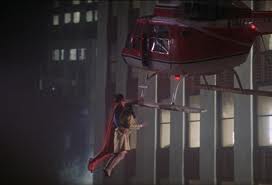
You're upset about the scientific inaccuracies in a comic book movie about an alien who can fly?
Some people were actually upset about the scientific inaccuracies in a comic book movie about an alien who can fly

“The monsters attack.”

This simple line in my action spec outline was the catalyst for a major thought process that continues to grow by leaps and bounds.  Questions are being raised that demand answers.

In creating this world, not only do I have to develop the story you’ll be following, but also fill in a lot of details about the world itself – which just happens to have monsters in it, which leads to more questions.  It never occurred to me to consider subjects such as biology, geology and the laws of physics as they apply to monsters (all of which play a part in the story).

“But it’s just a story,” some might say. “Don’t worry about stuff like that.” But it’s exactly the stuff like that that makes the story better, plus it shows I’m taking this seriously – even if it does involve monsters.

I’ve always had an intense dislike for writing that takes the easy way out in explaining something, or does it in a very half-assed way.  It makes it seem like the writer didn’t care enough to do a little more work.

It’s very important to me that not only are the events of the story based in reality, but the setting is as well.  This is something I strive for in everything I write – no matter what the genre.

The more detailed you can make the world of your story, the more believable it’ll be. But be careful not to overdo it – too much detail creates confusion. Just give enough to make ’em say “Yeah, that makes sense.” or “I can totally see that happening.”

Now it’s back to my research on which metallic alloy would be the most effective for killing monsters. So far, tungsten carbide seems to be the frontrunner.

Find a tone and stick with it

Something in this seems a little out of place

I used to dread getting feedback. It always meant having to go back and rewrite something.

Fortunately, I’m well past that and now appreciate how necessary both feedback and rewriting are.

Feedback makes you learn to value the necessity of hearing how somebody else interprets your work, and more importantly, how to be objective when it comes to really understanding what they have to say.

While working on the outline of my mystery rewrite, I looked for opportunities to put in an occasional joke (read: cheap laugh).

The problem, according to my top feedback-provider, was that the jokes, while understandable for their intent, were totally wrong for this kind of story. They make my protagonist come across as an idiot and the action comes to a screeching halt each time. And since this is more mystery than comedy, they shouldn’t be drawing attention to themselves like that.

There were other notes besides this one, but this one really struck a nerve – in a good way. I’ve been working on rewriting the jokes to make them a better fit within the context of the story, rather than have them be glaringly obvious and out of place.

As you create the world of your story, you have to make sure all the elements combine to make a believable scenario. This goes way beyond the story and the characters – take everything into account.  If something seems out of place, fix it or get rid of it.

And if you’re not sure, that’s what feedback is for.

Two non-writerly questions for you

Inquiring minds want to know

1. Seen anything good lately?

Thanks to Netflix for finally updating some of their content. I’ve been working my way through Season 3 of THE WALKING DEAD (phenomenal, of course) and Season 1 of ARROW (better than expected, a little cliched here and there, but still fun). Next up – second half of Season 7 of DOCTOR WHO, followed by either BREAKING BAD, MAD MEN or finally getting around to BATTLESTAR GALACTICA.

-Watched SHARKNADO (2013) – so bad, it’s extremely bad – and THE EXTRAORDINARY ADVENTURES OF ADELE BLANC-SEC (2010) – a live-action adaptation of a French comic book that started out charming and strong, but lost its footing in the second half.

2. How’s your latest project coming along?

As chronicled here, my 3 projects are all moving ahead slowly, with confidence levels gradually increasing for each.

That’s me. Now you.