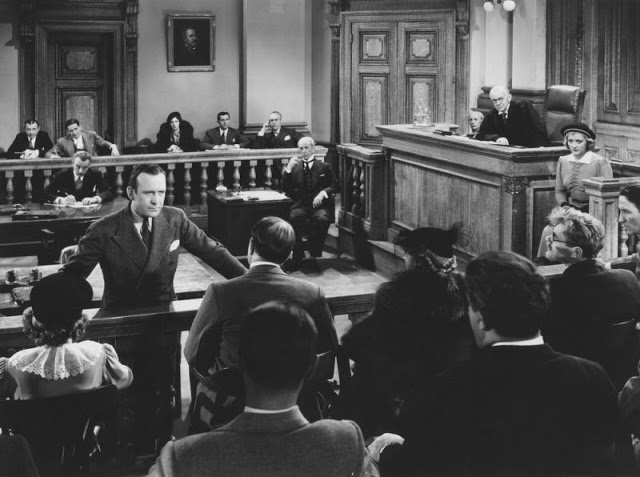
Sums it up succinctly

bttf1
“Spaceman from Pluto”?*

While taking a break from working on the comedy spec this weekend, I took an unexpected dip into my file of “ideas in development” – scripts I plan on eventually writing.

One had more details to the bare-bones outline than I remember. In fact, I barely recall even writing it. Still, pretty impressive.

Another was just a logline and three potential titles. While the story really adheres to my ongoing attempt at trying to write material of a smaller nature (i.e. not as big-budget), what really stood out was those three titles and how different they were from each other.

The first stirred up a kind of noble nostalgia, and in retrospect might be better suited for another story.

The second was pretty generic; almost like something you’d see on a VHS copy of a mid-90s B-movie gathering dust on a lower shelf at your local video rental store. If you’re of a certain age, you totally get that reference.

The third was very reminscent of a certain genre and style of older films, and the final word in the title tells you what kind of story to expect. Such was the case here, but as much as I like the word, it wasn’t exactly the right fit for the story I wanted to tell.

Fortunately, the word in question has a lot of synonyms, and one in particular really jumped out at me. Some might consider it of a vulgar nature, but wow did it fit. In fact, as soon as it popped into my head, I actually laughed out loud, thinking “oh my gosh, this is PERFECT.”

Because not only is the new word an ideal fit for the story, but it really drives home the tone.

Although work on this script goes into the ever-growing pool of “future projects”, at least now the concept and story are a little more developed than they were. And any progress is good progress.

There can’t be enough emphasis on the importance of a strong title for your script. It’s the entry point for your reader. You want them to know what kind of story they’re getting, what to potentially expect, and most importantly, you want them to be excited about reading it.

Sometimes your initial title is good, but there’s nothing wrong with a little tinkering to find an even better one. Like your script, it can always do with a little rewriting.

*Universal Studios head Sid Sheinberg didn’t like the title “Back to the Future,” claiming nobody would see a movie with “future” in the title. In a memo to Zemeckis, Sheinberg suggested the title be changed to “Spaceman from Pluto,” and the title reference be worked into the film.

In response, Spielberg sent a memo back to Sheinberg, thanking him for sending his wonderful “joke memo” and that the office “got a kick out of it.” Embarrassed, Sheinberg let Zemeckis and Spielberg keep the film’s original title.
A cavalcade of classics

vintage dj
Spinning the hits and spouting some snappy patter!

Another time of busy-ness around Maximum Z HQ, so thought I’d offer up some previous but still quite relevant posts.

Enjoy!

A support staff of one

Avoiding the dreaded unfilmable

Strong rope & solid knots required

Best seat in the house

Behold my awesomeness!

Drastic, possibly foolhardy, but definitely beneficial

Window Cleaner
Sometimes extreme measures must be taken, no matter how challenging

Work on the outline of the comedy spec continues – with a most interesting development.

But first, a little backstory…

When I first approached this rewrite, I knew it needed a lot of work. A LOT. So I decided not to call it a rewrite, because it was much more than that.

“Overhaul” seemed perfectly appropriate. So that’s what I was calling it.

Problem was, that even with some quality notes, I wasn’t sure how to go about it. When I take on a rewrite, I’ll usually refer to the previous outline and see what I can do to change things around.

But that wasn’t working this time. Quite the opposite, actually. I was feeling stuck, making zero progress, which in turn was making me feel annoyed and frustrated. I was more and more in desperate need of some kind of solution.

I had a solid concept, but it was the execution that was giving me trouble. I knew where I wanted to go, but was having trouble getting there.

When I provide notes on a script, if I read something that feels flat or unoriginal, I’ll suggest “Try a totally different approach that gets us to the same point. Do a 180, or make a hard left – anything to really shake it up!”

It’s worked for other writers, so why not apply that sage wisdom to myself?

So I did.

It’s a lot easier to suggest “Wipe the slate clean and start over!” than it is to do the wiping and starting over.

But so far it appears to be just the solution I was seeking.

Although somewhat intimidating at first, the blank page soon became filled with new ideas and variations on old ones. Certain details remain the same, plus a few odds and ends, but for the most part, it’s become a much different journey to the original destination.

It was also surprising how easily the new material popped up. By not keeping myself chained to the previous draft, I was allowing myself the freedom to just try new stuff.

There’s still a lot of work to do, but it’s a most satisfying start.

I hope this really registers with you

courtroom
Take the appropriate steps, and this kind of result can be easily avoided

Pop quiz!

You’ve just finished the latest draft of your script. Not the first draft; maybe a few later. Exactly which one is irrelevant.

But you’ve got what you consider a pretty solid script, to the point that you think it’s ready to start sending out. Queries, contests, what have you.

What important step should you take before anything else?

And…pencils down.

For a more thorough explanation than I could ever provide, here’s a post from the apparently defunct cinemoose.com that all screenwriters should read and heed – especially those of you still in the starting-out stage.

(Author’s note – this is just one of the numerous posts about this topic from the screenwriting-based internet, but the info and advice is more or less the same)

“So you’ve finished your new script and you’re ready to send it out to producers and production companies. How do you protect your work?

Registering your script with the Library Of Congress costs $35. The WGA (Writers Guild of America) offers a similar service for $10 for WGA members and $20 for non-members. So which one is better? Or should you do both? And what about the “poor man’s copyright”?

The Library of Congress

The Library Of Congress is the organization within the United States that deals with copyrights. What is a copyright? According the Library of Congress website, copyrights are a part of intellectual property law that protects “original works of authorship including literary, dramatic, musical, and artistic works, such as poetry, novels, movies, songs, computer software, and architecture.”

Copyrights do not protect names, titles or ideas. This last point is an important one. Just because you have a great idea for a movie about a disaster movie involving earthquakes does not mean that you copyright that idea and prevent someone else from making a disaster movie about earthquakes. Copyrights only protect the way an idea is specifically expressed. What this means in plain English is that copyrights may only protect the characters, dialogue and story elements that make your specific telling of the story unique.

Technically speaking, your script is copyrighted from the moment you finish it. However, it is a good idea to register your screenplay with the Library of Congress to establish a legal record that may be used in court if you are unfortunate enough to be involved in a copyright infringement lawsuit as a plaintiff or defendant. Registering your screenplay costs $35 and is a relatively simple and straightforward process. Note: screenplays fall under the category of performing arts, not literary works. You can visit the Library Of Congress’s copyright site for more information or download the forms for copyright application here: Copyright Registration Form PA.

The WGA Script Registry

The WGA also maintains a script registry service for screenwriters to register their works. Their service costs $10 for WGA members and $20 for non-members and is valid for five years. The WGA claims that while their service does not replace registering your work with the Library Of Congress, the WGA script registry offers an additional layer of legal protection for your work.

Hogwash. Registering with the WGA does not offer any legal protection for your script. It is, in fact, a money-making scheme of the WGA. The only thing you can do to legally protect your work that will hold up in a court of law is to register with the Library of Congress. The WGA script registry is a waste of money and is not recommended unless you have money to spare and just wish to support the WGA.

(Author’s note – the WGA registration has to be renewed every five years, whereas the Library of Congress copyright is good for the life of the author, plus another 70 years.)

Poor Man’s Copyright

I’m sure that many of you out there have heard of the poor man’s copyright. This process involves mailing a copy of your work to yourself and keeping the sealed envelope with the certified mailing stamp as evidence of your copyright. The poor man’s copyright is little more than an old wives’s tale as there is no provision in the copyright law regarding any such type of protection. It’s about as useless as the WGA’s script registry.”

A subject worth discussing

soapbox
Listen up, and listen good

Stepping onto my proverbial soapbox to utter a few thoughts on something that needs to be said.

If you’re part of an online forum, and you post your material in that forum seeking feedback from other members, you will get all kinds of responses. Some will be positive, and some will be negative – maybe to point of being outright condescending.

How do you respond to the positive ones?

“Thanks. I appreciate it.” Maybe elaborate a little, or a follow-up question or two. Possibly even ask to communicate with the person in private.

The negative and/or condescending ones?

“Thanks.”

That’s it. No matter how much you feel the urge to respond with a stinging retort written in ALL CAPS and a lot of exclamation points, just don’t. You asked for comments and you got ’em.

A thick skin is a necessity in this business. Arguing or getting angry because you don’t like what somebody said won’t help you or your writing, and it makes you look petty and unprofessional.

Now let’s address the other side.

Somebody asks you for notes, and based on the quality of the material, you do the best you can, trying to be as helpful as possible. Be honest with your suggestions of what needs to be fixed.

Does it have potential? Mention that. Are there problems? Identify them and how they could be fixed.

If the writing reflects an amateur, or a poorly constructed idea, point out how and why in a constructive manner. There’s no need to be insulting or talk down to them. Chances are they’re still learning, so they don’t know as much as you do.

They may not like what you have to say, maybe even going so far as to insult you and your experience, or deride your comments. But that’s on them. You’ve done your part.

So let’s review.

You want help? Take what you get, even if you don’t like it. After your temper cools down, take a serious look at what was said. There may be something in there worth using.

Somebody asks you for help? Be professional and as helpful as you can. Don’t hold their lack of experience against them.

No matter whether you’re giving or receiving, be patient, tolerant, and open-minded.

Keep that in mind, okay?

Thanks. The soapbox is now available.