Moving that inner strength outward

It may not be as heavy as you think
It may look heavy, but it might not feel that way

I hate hitting a lull. Even the sound of it is off-putting.

“Lull.” Yuck.

Which of course is exactly where I found myself over the past few days regarding the first draft. I thought I was making some good progress, but instead found myself staring at a screen that mockingly stared back.

“Come on, writer boy,” it seemed to say. “Show we what you can do.”

Putting more pressure on yourself combined with the anthropomorphization of electronics doesn’t usually end well. You’re already frustrated, and when the words won’t come, you just want to throw up your hands and do your best Bill Paxton impression.

I’ve been down this path before. I don’t like it, it ain’t pretty, but it’s gonna happen and I accept that.

This is one of those times when you have to remind yourself that you’ve got two options: quitting, which is the easy way out, and totally squashes all the hard work and effort you’ve already put in.

Or you dig deep and force yourself to keep going. Again.

I recently started re-reading my copy of THE FIRST TIME I GOT PAID FOR IT, which chronicles the tales of many successful and well-known writers and how they got started. Apart from some great stories, it’s a good reminder to us outsiders striving to be insiders that even the pros started in the exact same place we are now.

And if you’re like me and want to change your status in that scenario, there’s only one way – keep writing!

I don’t know what the exact trigger was, but the next time I faced off against that blinking cursor and half-empty page, something clicked.

Boy, did it.

The words didn’t just flow – they gushed. It was like a Niagara Falls of scenes and dialogue pouring onto the page. My fingers could hardly keep up with my brain.

Whoa. Three pages in thirty-five minutes? Inconceivable!

I definitely now feel back on track. A renewed sense of what drew me to the story in the first place. Being that much closer to being able to type FADE OUT. And a little more faith in my ability to be productive, even when I don’t think I can be.

Take that, lull.
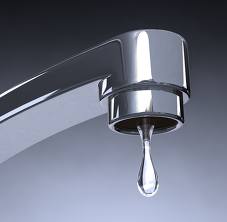
A leaky faucet can be just as good as opened floodgates

faucet
All those drips can really add up

We’ve all got busy schedules, so finding time to write can be quite the challenge.

One writer I know says he waits until his kids go to sleep. Another one gets up early and writes until he has to start getting ready for his day job.

Since I work unusual hours, my prime writing time is mid-afternoon before I head out to take care of Dad stuff.

For the past couple of weeks, circumstances have limited me to about an hour, which has been very productive. My goal on days like this is to write at least one page; two if I’m on a roll, and this is what usually happens.

But working within a set time limit has also been surprisingly liberating. Knowing you’re only producing one or two scenes really takes the pressure off, and removing that part of the equation can definitely yield positive results.

Just as an example, I had to come up with a new way to have a scene play out because it was way too similar to one earlier in the story. Since it was the last of a handful of small scenes I was doing that day, I knew I’d be done when the scene was done.

A few minutes later, that’s what happened.

Not worrying about the time allowed me to really focus on what I had to do, and since I already knew what the point of the scene was, it wasn’t too hard to come up with a solution.

The more you work at it, the easier it’ll get to be productive, even if it’s only a page or two at a time.

One good turn

No problem. I'm happy to help.
No problem. I’m happy to help.

An incredibly amazing thing happened to me in a remarkably short timeframe.

My script DREAMSHIP is on the Black List’s public site. You have to pay every month to keep it on there, and if you want a professional reader to review it, you have to pay for that too.

My family’s currently involved in the ongoing economic recovery, so we have to be careful about where we spend money.

I was content paying the monthly fee, but reluctant to spring for a review or two.

Then came the results of the Tracking Board Launchpad contest. The whole manager thing. I liked how everything was developing.

I wanted to know more about some of the other scripts in the contest, so I checked out loglines and the pitch for each (“X meets Y”, which will probably be the subject of a post next week). Some of them sounded very intriguing, so I wrote to the writers asking to read their scripts.

One declined, wanting to wait until they signed. No problem.

Another was flattered, sent it, and asked to read mine. Again, no problem.

But this writer also noticed my script was on the Black List with an 8/10 score from one rating. Why didn’t I get a second review, which would make it more visible and raise its profile?

Two reasons: I was reluctant to spend the money, and even though I did well in a high-profile contest, I was still nervous about getting a bad review. The fear of rejection never goes away.

But I said I’d probably eventually bite the bullet and do it. Maybe the overtime from working July 4th & 5th would help.

So while I was working on the 4th, I got a very interesting email from someone at the Black List (who apparently was also working on the 4th).

Apparently this writer who had encouraged me to spring for a second review took matters into their own hands and offered to pay for my second review.

Gasp.

And the Black List folks thought this was so nice, they decided to give me the second review for free.

Double gasp.

Somebody I only know through a handful of emails did something extremely nice and generous that has the potential to make a significant positive impact on my career.

What can you possibly say to this? I was sincerely and honestly touched by such an act of generosity, and sent my thanks to both.

Hopefully someday I can return the favor to this writer in one way or another, and if things work out, try to help out others in a similar fashion.

Despite what you may think, not every writer is out to steal your ideas, or play dirty and step all over you just to advance their own agenda.

There are still nice people willing to help you out, sometimes when you’re not even expecting it. I’m all about helping others when I can, and an act like this just makes me want to do it more.

Make that sprawling epic a little less so

There can be such a thing as too much

An underrated bonus of working on a first draft is having the freedom to put in just about anything you think will work (provided, of course, it advances the plot, story and character development).

There will be the inevitable edits and rewrites afterward, but this is your chance to take that outline and really build on it.

But it’s also easy to overdo it.

All that witty dialogue, intricate scene descriptions or clever subplot you just thought up can quickly add up without you realizing it, and suddenly your tight, compact story has become a bloated, overstuffed mess.

Scripts usually run 90-120 pages – one page equals one minute of screen time. Does yours fall somewhere in that range? Anything more or less, and you’ve got some work to do.

If you ask somebody to read your script, one of the first things they’ll do is check out how long it is. 97 pages? Cool. 137? Unless you’re an award-winning filmmaker, not so cool.

“But there’s nothing I can cut!” you exclaim.

Wanna bet?

Once you’re done with your current draft, don’t look at it for at least a week; two would be better. Put it away and walk away. Focus on something else.

Then come back and just read it.  No editing, just reading.  Still think there’s nothing you can do with it?

Now the fun begins.  Go through it and really scrutinize each scene.

Is it absolutely crucial to the story? If so, can it be shorter?

All that great stuff you came up with on the fly – does it still work?

It may be tough at first to kill all those darlings, but more than likely, you won’t even miss them after they’re gone.

If you want to be a better writer, you have to learn how to not let your ego and emotions dictate your edits. In the end, both your script and writing skills will be the better for it.

Saying more with less

The digital version of this is inevitable

Logline and synopsis update!

Just some minor tweaking of the logline, and the synopsis is “good, but too long.” Could I maybe tighten it up, and how about ending with a cliffhanger?

You mean after spending so much time delicately crafting everything so it all flowed smoothly, I’m supposed to just go in and hack it all up?

Exactly.  Streamline what I already have, cut the non-essentials, and focus solely on the main storyline.

This was challenging, but it had to be done (and could potentially help me get over my dislike of writing a synopsis in the first place)

I worked my way through it and ended up with a tighter, better version, including a double cliffhanger.

One of the best pieces of writing advice I’ve ever heard was during a workshop with UCLA’s Richard Walter:

Write as if ink costs a thousand dollars an ounce.

Which are you more likely to want to read? A script with lots of white space on the page, or one with big, black blocks of dialogue and action lines?

It’s not enough to have a well-crafted story. You want the words and pages to really move, and a minimal amount of text can help make that happen.

Go through that scene you just finished. Figure out how to shorten it, keeping only what’s necessary.

Don’t think anything can be cut? Look again. Adverbs and prepositional phrases are good places to start.

You want the reading experience to be a breeze, not a slog. Too many words can do that.

-Finally attempted the Great Baklava Experiment. Apart from somewhat time-consuming and working with phyllo dough, not as difficult as I thought.  Maybe a little too much sauce, which is probably better than not enough.

Overall, consider it a success.

Now to figure out what to make next.