What? It’s been done?

Similar, yet different

My work schedule has been all over the map lately, so not only has my writing time been limited, but also my script-reading time as well.  Nevertheless, I try to read when I can.

(*If you can, I highly recommend getting an iPad. It’s perfect for reading scripts. Apparently this is also now the industry standard.)

A few weeks ago, Martin Helgeland’s SLAYER was among the selection of that week’s Scriptshadow offering.  “This is the dragon slayer in modern day script that just sold for a boatload of money.” How could I resist?

My immediate reaction: I can see why it sold. It’s a solid, action-packed story loaded with lots of cinematic images that muscles its way forward and jams the action down your throat with a vengeance.

I wasn’t crazy about the writing. It seemed a little too showoff-y. “The sword KEENS.” Huh?

But what really got my attention was how similar the story was to one I came up with about 2 years ago. Obviously, some of the details are different, but they share some basic story points.

This isn’t a big deal because the story itself isn’t completely original. You’ve probably seen or read ones just like it numerous times. Helgeland has his version; I’ll have mine,which isn’t even written yet. It’s still in the outline stage, and I can use this as a guide for how to make mine more different.

This happens all the time, and has been going on for quite a while, as evidenced here. Most likely, everything you or anybody else has ever written is in there somewhere.

So stop worrying about someone stealing your ‘original’ idea and focus instead on how your work can stand out from all the other ones just like it.

It may not be as hard as you think.

I can see clearly now

Ahoy! Rewrite dead ahead!

This week’s installment of The Script Adventurer! featured an interview with the multi-talented Heather Hale.  She’s worked as a writer, a director, a producer and as a consultant, so she definitely knows her stuff. (Mark your calendars – the show re-plays Sunday at 7PM on radioslot.com)

I always like to know what key piece of advice a professional or working writer would offer to the rest of us.  A thought or phrase to jot down on an index card and attach to the wallspace in front of your working area.

Heather named two.

1. Clarity is king.

You may know your story inside and out, but if the person reading it can’t follow it or is confused as to what’s going on, then you’ve got a problem.

It doesn’t matter if you’ve got the most brilliant concept ever.  The plot and story have to be clear so anybody can pick up the script and know exactly what’s going on.

It’s up to the writer to make their story as easy to follow and comprehend as possible, or else the reader/audience will get lost in the story, and not in the good way.

2. The reader is never wrong.

You think your script is perfect. The reader knows better. It’s their job to go over it with a fine-tooth comb and look for flaws.  And unless you’ve attacked that script from every conceivable angle, fixing any potential problem you can think of, they will find them.

The reader really does want to like your script, but if you give them any reason to say no, there’s no reason to be bitter about it.  They know what they’re talking about.  Look at this as an opportunity to make your script better or stronger than it was before.

-Movie of the Moment: Three over three days!  It’s been a long time since I’ve done that, and two were actually in theatres. Wow!

THE HUNGER GAMES (2012). I read the book last month, so it was pretty fresh in my mind. I liked it, although it could have been a little shorter. I can appreciate a strong female protagonist, and it’s easy to see why Katniss has caught on.  She’s tough and doesn’t give up.  Congrats to Jennifer Lawrence for doing a solid job in the lead.

I also really enjoyed Stanley Tucci as Caesar Flickerman, the blue-coiffed TV personality with perfect teeth. A great accomplishment in casting.

My only complaint – Katniss doesn’t always drive the action forward. She’s more reactive than active in some scenes.

-THE SECRET WORLD OF ARRIETY (2010). Another animated gem from Miyazaki and Studio Ghibli, based on the classic books THE BORROWERS.  A recurring theme in a lot of their films is the main character’s coming of age. And this one is no exception. If it weren’t for 3 of the characters being 3 inches tall, this could easily pass as a stage production. Good for all ages.

-RISE OF THE PLANET OF THE APES (2011). Smart and well-written. Easy to see why this was a surprise hit last summer. Especially fun if you’re familiar with the original films. K made an interesting point in that you’re rooting for the apes to win, which would mean the eventual downfall of humanity.  Count me in the camp of those who think Andy Serkis should have gotten some kind of recognition for his mocap work as Caesar.

(temporarily) not writing = good thing?

T minus how many days?

This week has been a lot busier than expected, so I’ve gotten practically no writing done.  Which really sucks.  Or does it?

I haven’t worked on the rewrite since last week, and most likely won’t get back to it until next week.  For me not to write over a 2-week gap is really something. But while this will unfortunately push back finishing the whole thing, it could also have a positive impact.

When a writer loses their focus, it really messes up their productivity.  And stepping away, voluntarily or not, could actually work in your favor.

You’ve probably heard it.  After you’re done writing, put the finished product in a drawer and ignore it for at least a week or two.  Then when you come back to it, you’ll be seeing it with a clear head and fresh, invigorated eyes.  Maybe you’ll see a problem you didn’t see before, or at least think of a way to make it stronger.  Or maybe you’ll uncover the solution to a problem that’s been driving you batty.

Got my fingers crossed for those kinds of results.

Finding a method in all that madness

Image
pre-computer 'delete' button

I was doubly fortunate to interview two writer-directors live and in-studio on yesterday’s installment of The Script Adventurer! – Joshua Grannell and Mary Regan.  Among the many subjects discussed was how each of us develop our ideas, especially in the beginning phase of building a script. (If you weren’t able to catch the show live, never fear – it will replay this Sunday at 7PM PST on radioslot.com)

While everybody has a different approach to how they put a story together, the style is usually very similar.  You come up with an idea, then figure out how to develop a story around it. Some people like to come up with as many potential scenarios that could arise from that original idea. Others may choose to meticulously weave an intricate web of storylines around it.  There’s also the time-honored practice of metaphorically throwing everything at a wall and seeing what sticks.

No matter what your style, it’s extremely important to hammer out all the kinks of your story BEFORE you start on pages.  It’s a lot easier to fix a problem contained in one sentence rather than one page.  This will also cut down on your frustration over having to go back and edit and/or rewrite.

Another plus is it gives you a more condensed and detailed view of your story, so it’s easier to keep track of where something happens if you need to jump back in and fix it. This way you’re not wasting time scrolling through pages trying to find that one thing you need to change.

Maybe this comes from years of focusing more on the outline first, but I’ve found that once I’m satisfied with how the outline is put together and start on pages, if I find something that needs to be fixed or I come up with a way it could be better, making those changes is a lot easier than it used to be.  I suppose it’s because I already know what the point of the scene or sequence is, so I don’t have to worry about what’s supposed to happen next and can instead channel my creativity into making it stronger/more effective.

A decent wifi connection will set you free

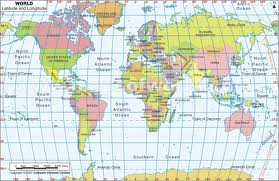
I'm in the mid-upper left. Where are you?

I had a great conversation with Richard Walter on yesterday’s edition of The Script Adventurer!.  He was his usual entertaining, anecdote-filled self. (Missed it? Never fear – it’ll play again Sunday at 7PM PST on radioslot.com)

There were two things in particular he talked about I thought were extremely important for any screenwriter to keep in mind.

When asked what was the most important thing any writer should know, his answer was Move The Story Forward.  If you have an interesting story that really flows and holds the reader’s attention, then your script is already that much more ahead of others.

Scene A should lead into Scene B, which leads to Scene C, and so on and so on. But if Scene R can fit between B and C, and not disrupt the flow, then it shouldn’t have been Scene R in the first place, or maybe R needs a serious rewrite.

The other thing was that unless you want to be part of series television, it’s not absolutely necessary to live in Los Angeles to be a screenwriter.  In fact, he added that it may even be an advantage:  you’re not constantly surrounded by people in the industry.  I cited Nick Schenk of Minneapolis, who wrote GRAN TORINO.

A big reason for this shift in thinking is the internet.  Query letters by email. Scripts attached as a pdf.  A ton of resources and groups available online.  I’ve connected with writers around the world via Twitter, which at times seems completely mind-blowing.  I could ask for feedback on a script and get responses from just about anywhere.

With a solid script and an internet connection, there’s no stopping you.